
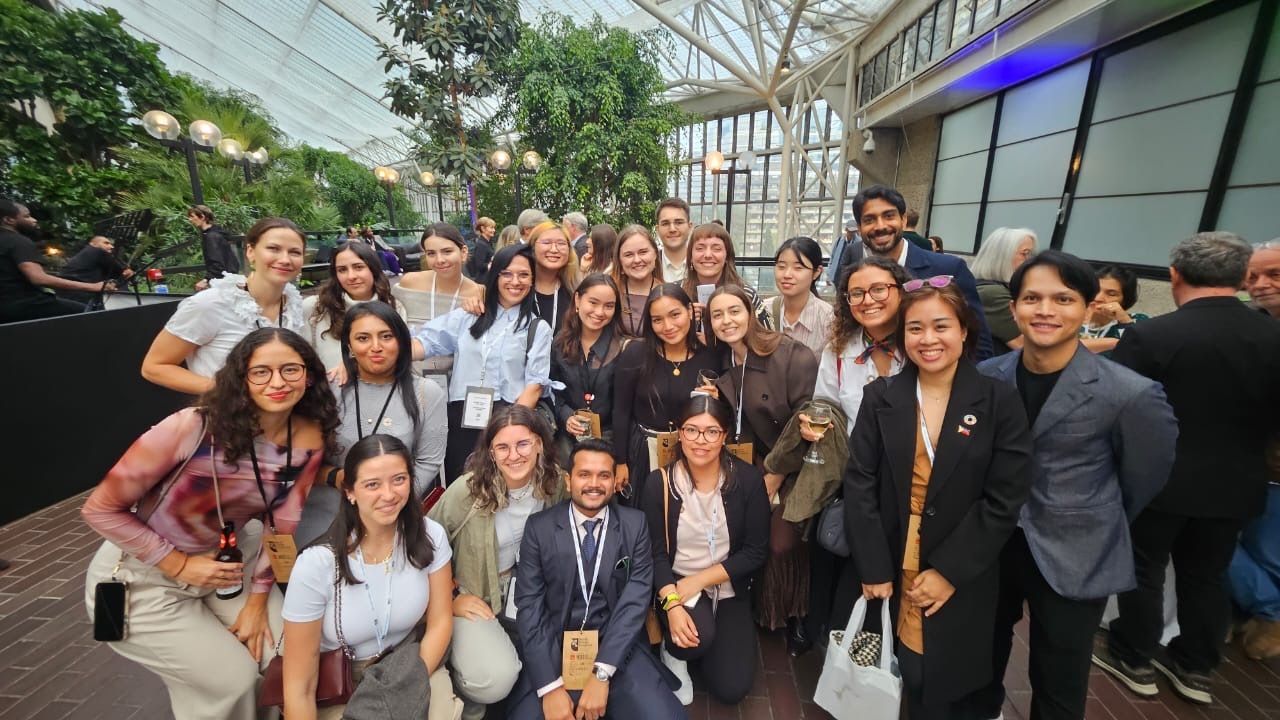
This September, over 1000 people gathered at London’s Barbican Centre for the World Design Congress 2025, unified by a shared interest and commitment to Design for Planet. Attending as members of WDO’s 2023-2025 Young Designers Circle, Arbresha Ibrahimi and Jana Beneito Molina share what resonated the most from their Congress journey and why it has them hopeful for the future of design.
The disconnect between humans and nature
One of the first conclusions drawn from the Congress was the evident disconnection between humanity, and the ecosystems that surround us. In some corners, there still seems to be a lack of awareness concerning humanity’s connection to, and reliance on nature. Ultimately, we exist on the same level as any other living beings that call this planet home.
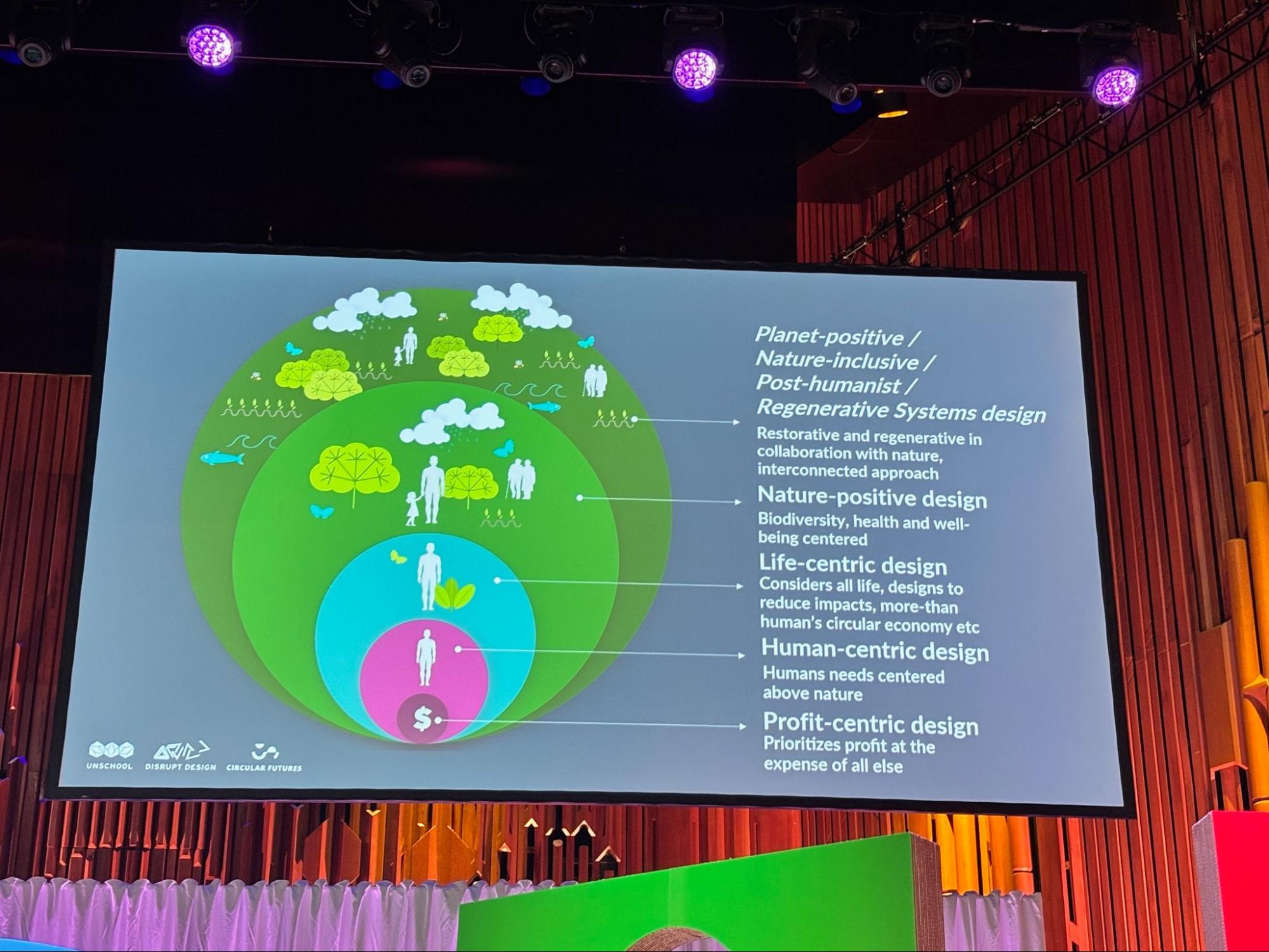
This mindset inevitably centres humans as the be all and end all of all design pursuits. It leads to products, services and experiences that fail to account for all planetary life. A key theme throughout the Congress was the importance of ‘more-than-human design’, an approach that expands humanity-centred considerations to include the needs of all living things, including non-human organisms and ecosystems. As emerging designers, these discussions provided both hope and warning at the same time: that in order to meaningfully address the climate crisis, we need to learn to design beyond ourselves.
How can cities embrace nature?
What happens when the urban and natural world collide? What does the future hold for this complex relationship? How much should we, as future designers, focus on this? It’s no secret that the sustainability movement has lost its way, rendered a tool of commercialization and marketing rather than positive change. And yet, the Congress restored our hope that a different kind of sustainability is still possible and in fact, already a reality.
Presentations from the likes of Thomas Heatherwick and Lord Norman Foster focused on the phenomenon of sustainable urban growth, framing the city as a living organism, where the urban and the natural worlds regenerate life together. A city where every neighbourhood is walkable, where zero-waste zones feed back into the Earth, and where intelligent systems harness natural potential for the benefit of both humanity and ecosystems.
A city that blends architecture and construction as a continuum of the site itself, where citizens experience a sense of purpose and belonging. Projects like Atelier LUMA in the wetlands of Camargue (France), or the Aral School in Uzbekistan, offered powerful proof that design can restore ecosystems, while simultaneously reviving local culture and economy. The Congress presented a true kaleidoscope of design for planet possibilities.
Design for planet is an opportunity
The climate crisis is not somebody else’s problem. It is not an isolated catastrophe. It is a global, intergenerational series of crises that will affect each and every one of us. The Congress brought individuals from all walks of life together to demonstrate that we all have a part to play, a contribution to make.
Design for Planet is not just a theme, it is an opportunity. Design Council’s Skills for Planet initiative is showcasing how green design can support long-term value through innovation, increased profitability and market leadership.
Design for planet is not a choice, it is the only option.
What does design have to do with it?
In one word: everything. Design can be a catalyst for systemic change, it can bring nature into cities and promote circular, regenerative systems. It can shape a sustainable future, whether through the creation of objects or systems.
The Congress highlighted that despite our perceived differences, it is in our shared interest to work together, to foster and create interdisciplinary and interspecies collaborations, to explore and to inspire our community to shift the narrative from one of global crisis to one of global care.
Whether you’re an emerging creative or a seasoned professional, it’s clear that designers can help lead the way toward a regenerative and resilient future. And the time to start is now.

Jana Beneito Molina
Based in Australia, Jana Beneito Molina is a graphic designer who holds a degree in Design and Creative Technologies from Universitat Politècnica de València.

Arbresha Ibrahimi
Arbresha Ibrahimi, Ph.D. is an architect and Assistant Professor in the Department of Architecture at International Balkan University in Skopje.


