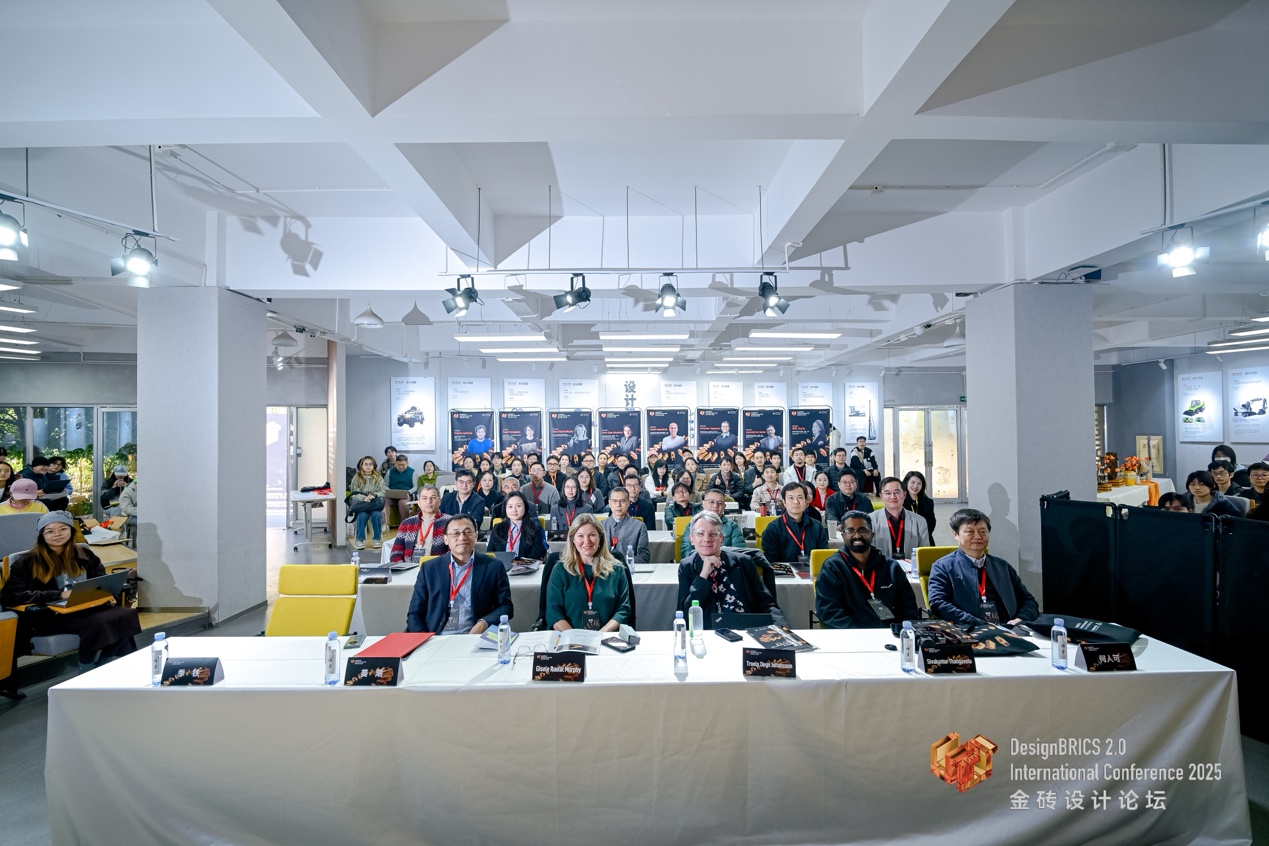
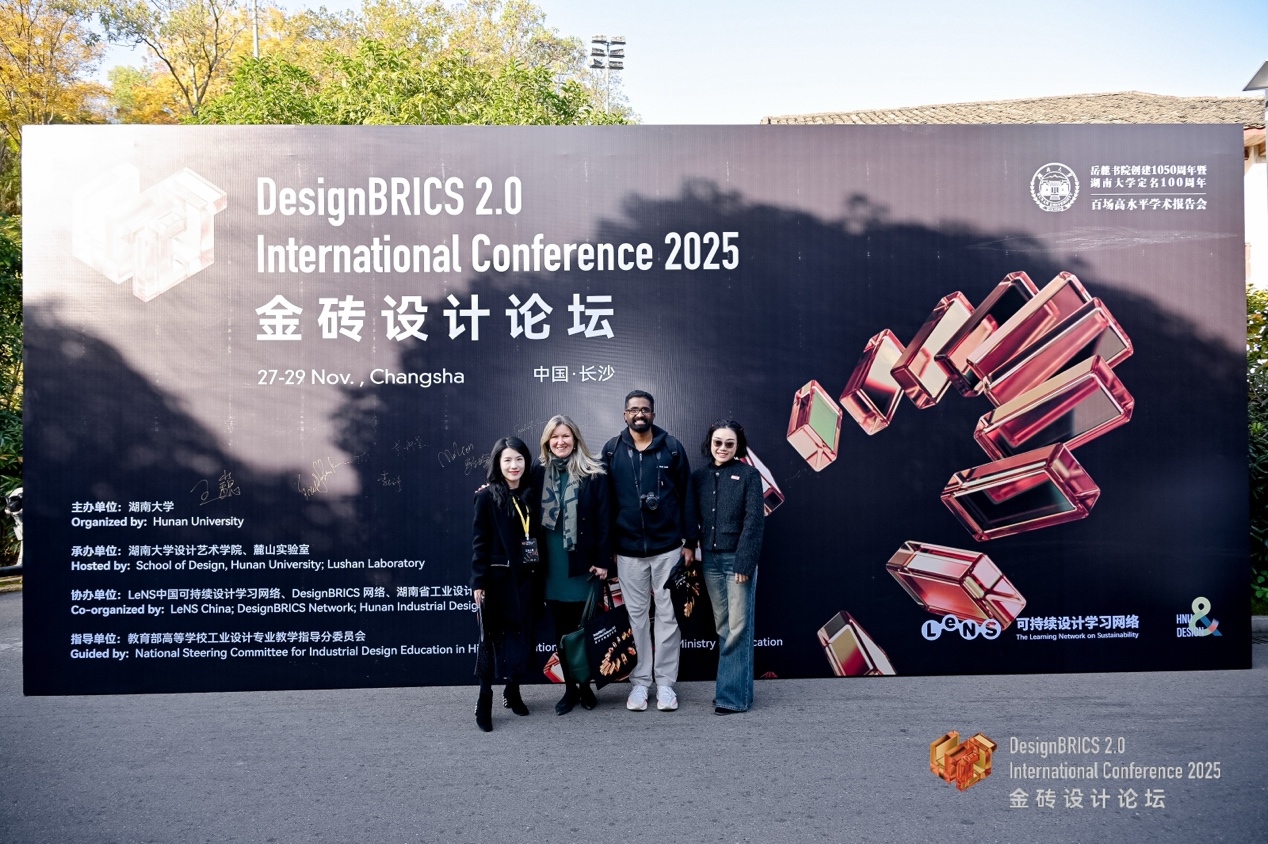
On 28 November 2025, the DesignBRICS 2.0 International Conference officially opened at the Lushan Laboratory Auditorium of WDO Educational Member Hunan University. The conference was organized by Hunan University and hosted by the School of Design, Hunan University, and Lushan Laboratory, with co-organization by the LeNS China Learning Network on Sustainability, the DesignBRICS Network, and the Hunan Industrial Design Association, and is held under the guidance of the National Steering Committee for Industrial Design Education in Higher Education Institutions under the Ministry of Education. The LeNS China 2025 Academic Annual Meeting is convened concurrently.
Under the theme AI & Sustainability: Beyond the UN SDGs, the conference brought together experts and scholars from leading universities, research institutions, international organizations, and industry worldwide to explore emerging paradigms, pathways, and responsibilities for sustainable design in the age of artificial intelligence.
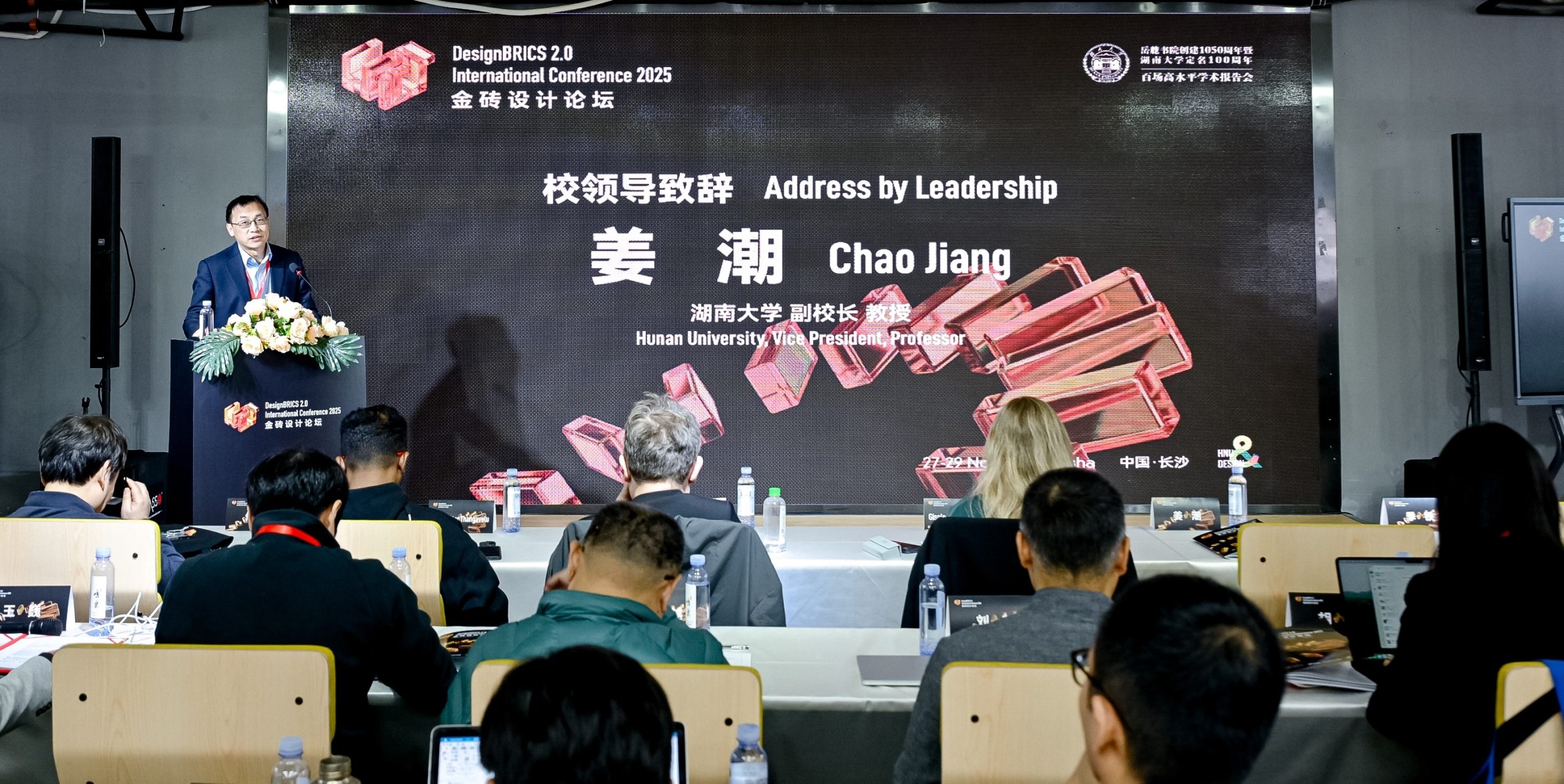
At the opening of the Conference, Professor Chao Jiang, Vice President of Hunan University, extended a warm welcome to participants joining both online and onsite from across the world. Framing his remarks within the contemporary context of artificial intelligence and sustainability, he systematically introduced Hunan University’s initiatives in talent cultivation and educational innovation, and expressed high expectations for the conference to contribute to reform in design education and interdisciplinary development.
Professor He Renke from the School of Design at Hunan University reviewed the development and mission of the DesignBRICS international academic network, and expressed his hope that DesignBRICS 2.0 would generate globally influential insights and co-creative perspectives on design and human sustainability through the convergence of diverse expertise.
Mr. Sergey Vladimirovich Kurasov, President of the Stroganov Academy of Art and Design in Russia, also delivered congratulatory remarks online, offering his sincere congratulations on the successful convening of the conference and conveying his warm greetings to the organizers and participants.
The morning sessions were chaired by Professor Wang Wei, Vice Dean of the School of Design at Hunan University, and featured presentations by ten invited speakers from Brazil, India, China, Iran, Denmark, Indonesia, Australia, Japan, and the United Kingdom.
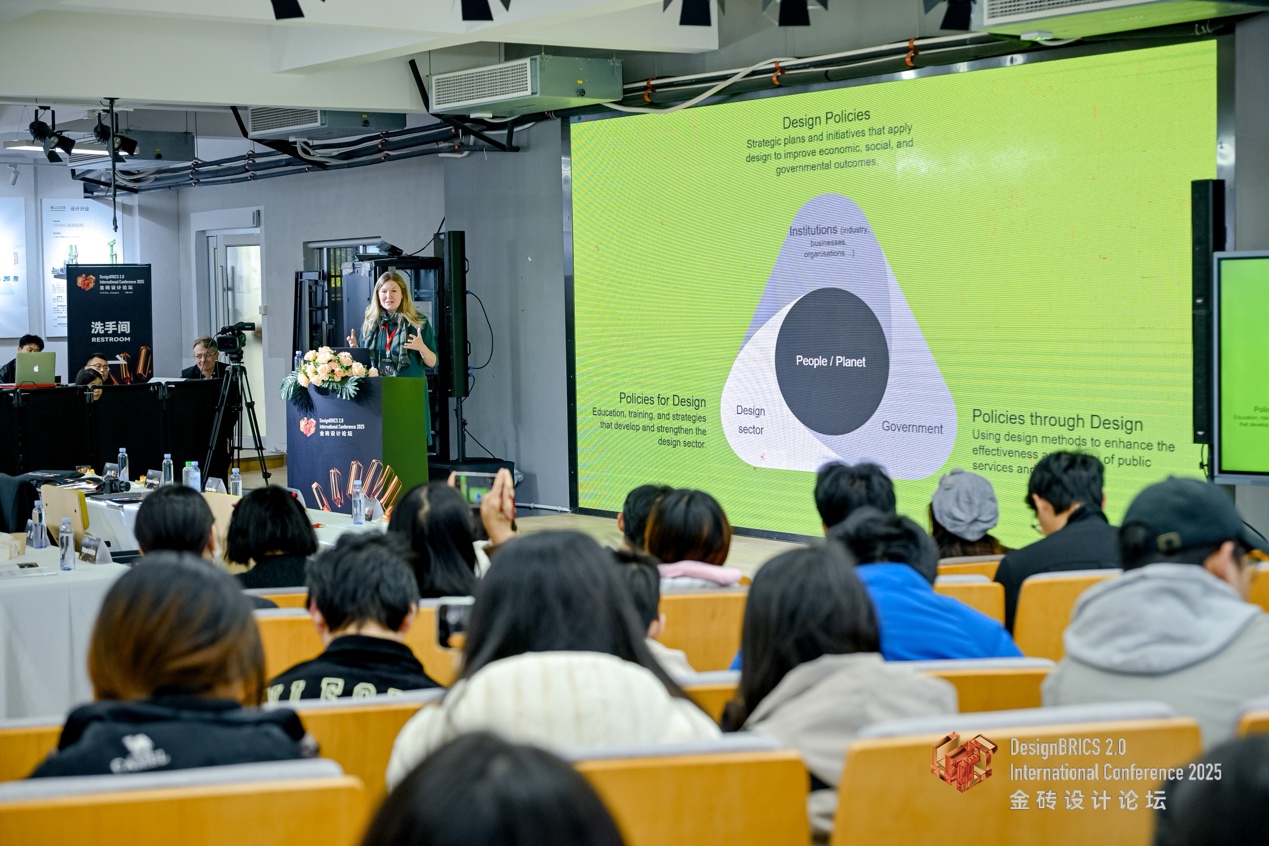
In the session on policy, education, and industrial development, Dr. Gisele Raulik Murphy, Founding Partner of the DUCO Design Intelligence, presented an analysis of design policy formulation. She noted that design policies are traditionally inspired by European, particularly Nordic, models; however, significant differences exist between Europe and the BRICS countries in terms of economic disparity, institutional complexity, and social challenges, while industry awareness of the strategic value of design remains limited. In many BRICS contexts, industrial development continues to be driven by low-cost and commoditized production, and the large national scale and multi-layered governance structures further slow down the realization and implementation of relevant policies.
Drawing on the practice of Curitiba, Brazil — a UNESCO Creative City of Design — Dr. Murphy illustrated how her team has leveraged design strategies to drive urban social innovation. She emphasized that BRICS countries should explore context-specific approaches when developing localized design policies, enabling design to better serve societal development needs.
The DesignBRICS 2.0 International Conference has attracted more than 150 participants and audience members both online and onsite, including faculty and students from universities across China, design practitioners, and scholars from related fields. Through a full day of academic exchange and intellectual dialogue, participants not only shared cutting-edge research and practices in artificial intelligence and sustainable design, but also engaged in in-depth discussions on key topics such as cross-sector collaboration, educational reform, and industrial implementation, developing shared perspectives on key challenges and future directions.
The successful convening of the conference has provided an effective platform for exchange among scholars in the global sustainable design community, and contributed Chinese design insights and innovative perspectives toward the implementation of the United Nations Sustainable Development Goals and the development of a more inclusive and resilient global sustainability framework.