
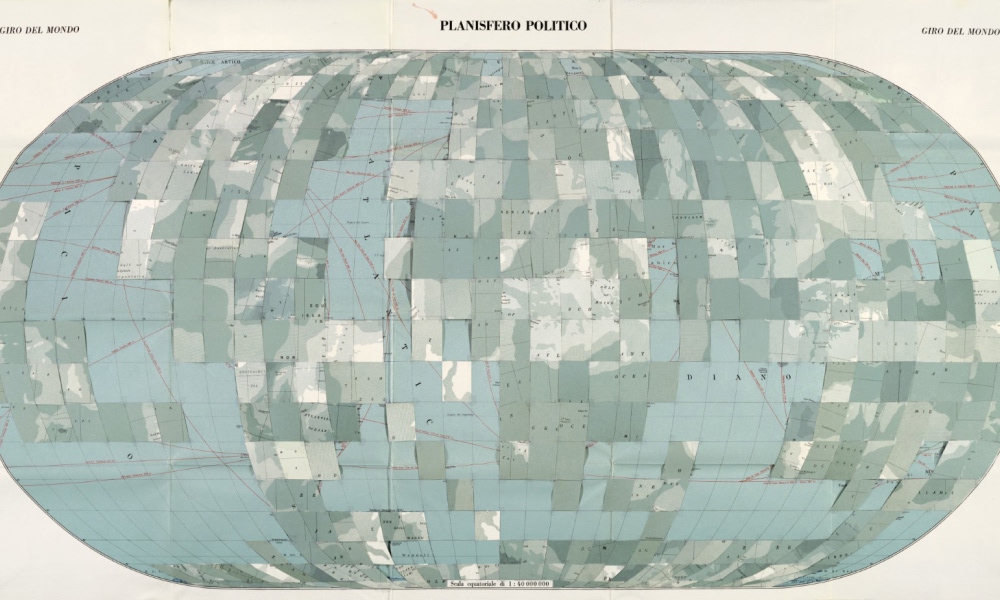
Image credit: Planisfero Politico by Giuditta Vendrame (2017)
A New Chapter for Ecocentric Design Education
December 3, 2025
Design, at its best, has always been a discipline rooted in care, an attempt to improve the conditions of life. But what happens when we expand the very definition of ‘life’ that design is meant to serve? This question sits at the heart of Design X Other Species, a pioneering new Master of Arts launching at WDO Educational Member IED Istituto Europeo di Design S.p.A. – Società Benefit (Italy) next year. At a moment when environmental thresholds are tightening and the consequences of planetary imbalance are impossible to ignore, the programme represents a bold attempt to shift design’s centre of gravity from the human to the ecological.
For programme coordinator, Milan-based design researcher and curator Angela Rui, the initiative grew out of an undeniable reality. “Given the current critical state of the environment, it is no longer possible to conceive of production and economics as being separate from our intrinsic relationship with the planet.”
She points to the fragility of vital ecosystem services, our food, water and materials, and the cascading effects their decline has on human life. From this perspective, designing solely for human needs is no longer adequate. As she puts it, “we must change the way we perceive the world in order to imagine new ways of orienting production according to necessary principles, such as the ‘nature positive’ approach.”
More-than-human design, in Rui’s view, is both intuitive and transformative. “Design has always played a social role,” she says. “If we consider what society or community is today, we can describe it from a multi-species perspective.” Humans, animals, plants and even technologies together form a dynamic assemblage that shapes the conditions of daily life. Recognizing this shifts design’s primary question: we must ask not only what do humans need? but also what sustains the ecosystems that sustain us? “Observing ecosystem relationships and designing for ecosystem quality of life is not only restorative, it is regenerative.”
Globally, academic programmes centred on more-than-human design remain rare. Rui attributes this to structural barriers rather than lack of interest. “While the more-than-human theme is widely taught in other fields such as contemporary art, humanities, science, philosophy and law, this is still not the case in design.”
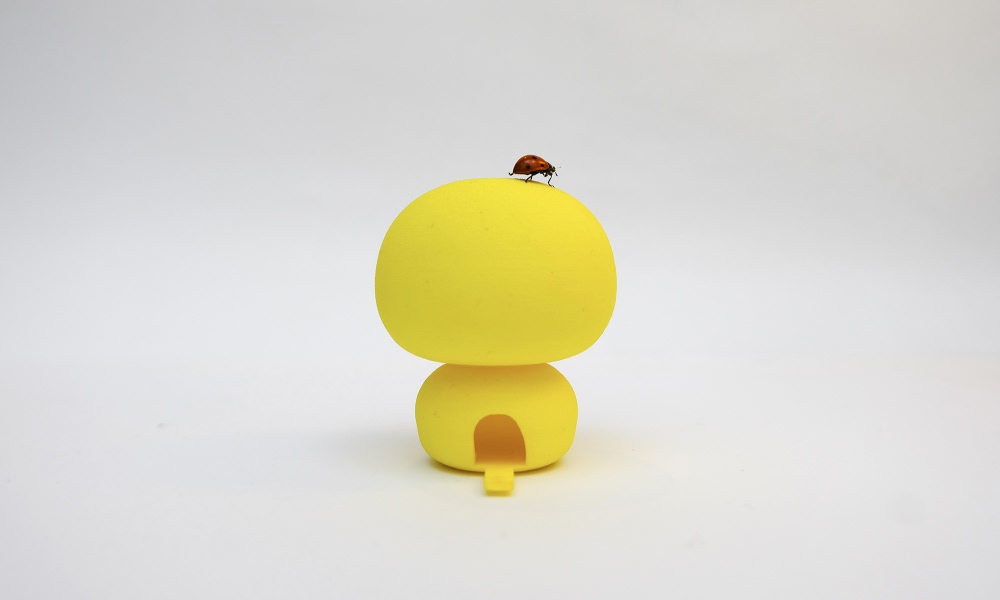
Although experimental spaces, from the Department of Seaweed at Aalto University to Rotterdam’s Nature of Hope Biennale, are flourishing, “the great challenge is the reform of curricula and courses recognized with ministerial accreditation,” she notes. Traditional frameworks remain industrial, disciplinary and anthropocentric. “Rather than changing the perspective of young designers, who are already sensitive to these issues, the focus should be on policymakers, companies, municipalities and government programmes,” which have the power to drive systemic change.
“We must ask ourselves whether design can facilitate the transformations necessary for humans and non-humans to face environmental challenges together.”
Design X Other Species aims to build that bridge by rethinking design education from the ground up. Through courses in ethics, ecology, environmental science, journalism and multimedia storytelling, students will learn to shift from human-centred to ecocentric thinking. Rui describes the programme’s goal as training designers to “critically engage in biodiversity-sensitive design and promote solutions based on the ecosystemic nature of cities, taking into account the specific needs of other species.” A hands-on technical component supports this: students will work with mentors to prototype installations using the classic, and increasingly undervalued, “trial and error” method to learn what different species actually need.

This applied dimension is central. The programme will be anchored at Villa Asquer, a 30-hectare forest in Sardinia that will become a living laboratory for multispecies design. “When designing for the more-than-human, it is important to remember that design is a ‘dialogue’. If this dialogue is merely imagined, it becomes speculative.” The forest, home to nesting birds, wild mammals and flora threatened by surrounding industrial zones, will allow students to test and refine their interventions in real ecosystems. Additional workshops will take place on farms and coastal landscapes along the Adriatic Sea. “If we are to design for the real world, we must first become citizens, paying attention to our surroundings and responding to what we observe.”
Graduates will enter a world that, while not fully aligned with more-than-human values, is changing. Rui sees growing opportunity among organizations committed to ecological restoration and the emerging bioeconomy. Companies investing in nature, she notes, are “building resilience, reducing risk, and unlocking new opportunities.” Beyond industry, graduates may work in R&D centres, apply for research programmes, or pursue artistic roles that elevate multispecies thinking in cultural discourse.
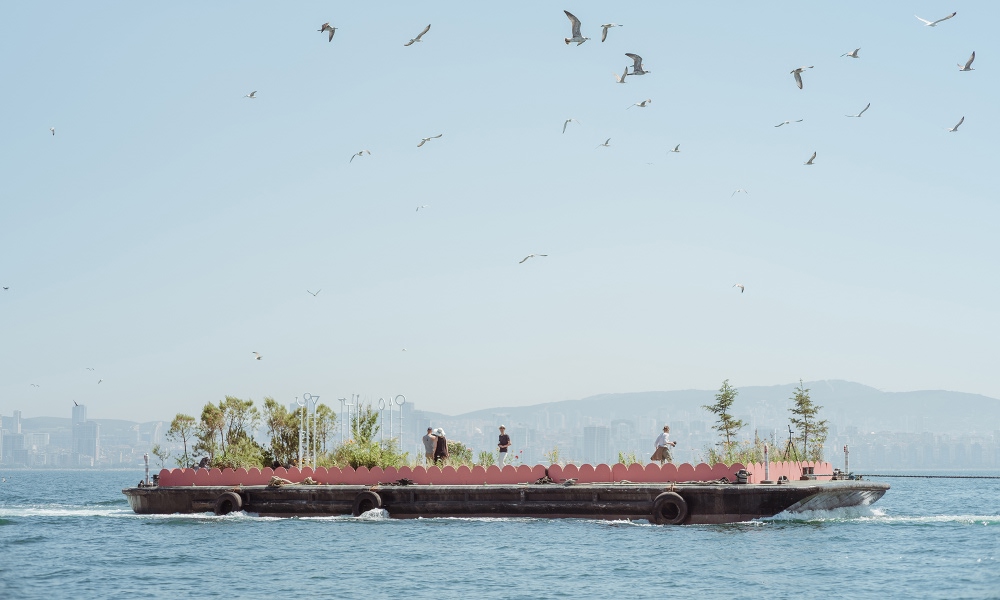
Still, the shift to designing with other species demands a profound reorientation. “The main challenge is the paradigm shift: viewing ecosystems and living things as customers rather than resources.” This requires listening, observation, scientific knowledge and even tools like therolinguistics — the study of animals’ communicative systems. Designers must learn to think less like engineers and more like ecosystems themselves. “Ecosystems don’t think. They sense. They implement metabolic systems that restore, renew or revitalise the resources used.”
As the world of more-than-human design continues to expand, it will provide new opportunities for connection, presence and community between humans and other species. For her part, Rui remains hopeful for this future. “I like to think that negotiation of urban space and all its surfaces will soon take place between multi-species actors, and that these actors will consider the needs, intelligences, urgencies and above all, the abilities that each will bring to bear.”
IED’s Design X Other Species Master of Arts programme will start in October 2026. For more information, please visit their website.
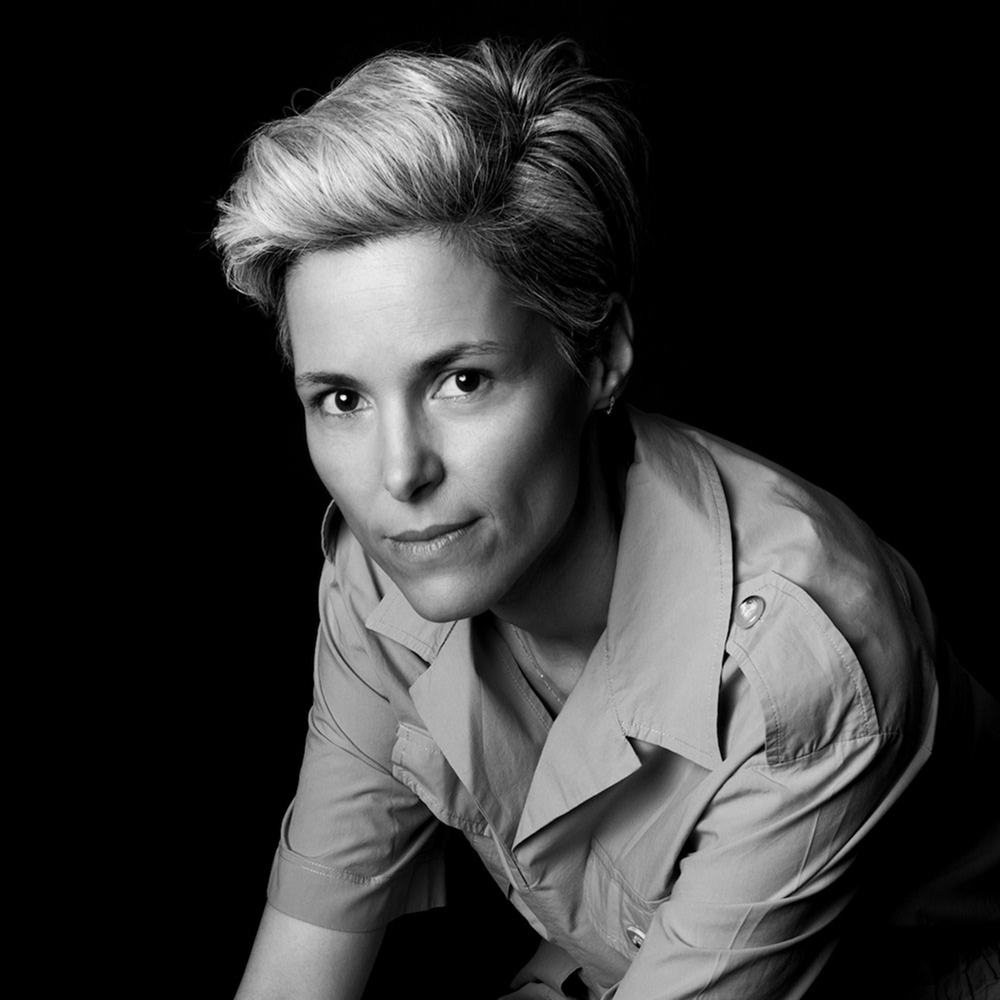
Angela Rui is an internationally renowned design curator and researcher with over 15 years of experience in design culture. As Head of Master of Arts Programmes at IED Milan, she developed DesignXCommons, a design observatory exploring commons and collaborative practices in social regeneration. She has curated two biennales: TIME IS PRESENT. Designing the Common (4th Porto Design Biennale, 2025) and Faraway So Close (25th Ljubljana Design Biennial, 2017), both examining design practices valuing relational and collaborative dimensions; exhibitions such as ITALY: A New Collective Landscape (ADI Design Museum, Milan 2023; HKDI Gallery, Hong Kong 2024 and Italian Pavilion Expo, Shanghai 2024), underlining new trajectories of Italian design in relation to collective and territorial dimensions; and “AQUARIA. Or the Illusion of a Boxed Sea” (Maat, Lisbon 2021), an investigation on the entanglements between culture and design in the context of marine ecosystems’ representation. She has taught at Design Academy Eindhoven, Politecnico di Milano, UNIRSM San Marino, NABA Milano, sharing her vision of design as a tool for social transformation.


