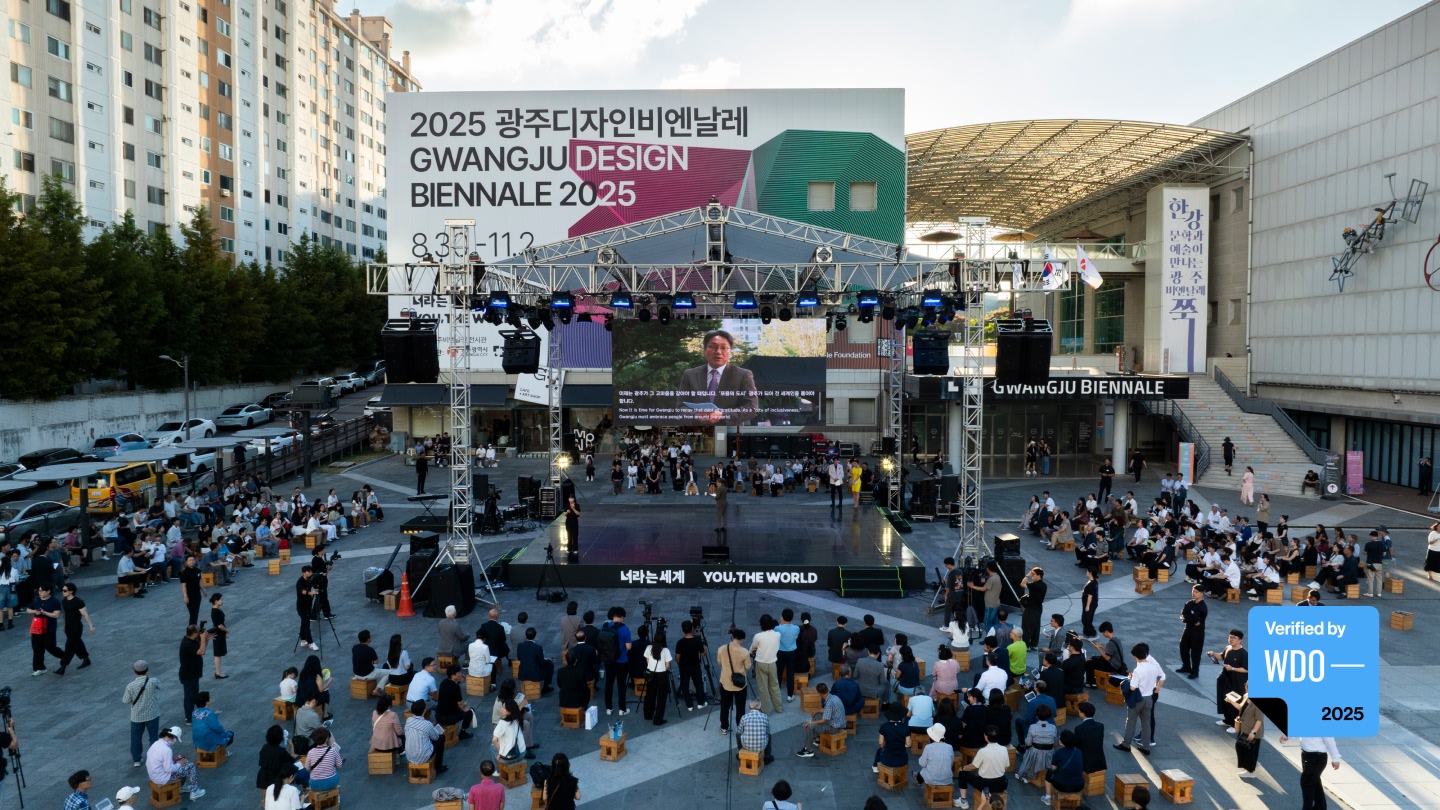
The 2025 Gwangju Design Biennale, held under the theme You, the World : How Design Embraces Humanity, successfully concluded on 2 November after a 65-day run. Since its opening on 30 August, the Biennale brought together 429 artists from 19 countries and 84 institutions, presenting 163 works of inclusive design at the Gwangju Biennale Exhibition Hall.
The Biennale opened with the proclamation of the Inclusive Design Manifesto declaring that “design is for all, is a source of creation, and is a universal right.” The manifesto affirmed that the essence of design lies in inclusion. As Artistic Director Sooshin Choi stated, “through the 2025 Gwangju Design Biennale, we hope that the value of inclusion will be actively practiced across all sectors of society, and that this movement will extend beyond Gwangju to resonate globally.”
>Breaking cultural and social boundaries to foster inclusion among individuals, families, and communities, the 2025 Gwangju Design Biennale championed a “together for all” ethos that dismantled barriers and reimagined the role of design. This edition demonstrated how inclusive design can cultivate solidarity and empathy by encouraging audiences to recognize differences in language, culture, education, and sensory experience.
“Inclusive and equitable design begins with recognizing our differences and cultivating empathy and care.” – Sooshin Choi, Artistic Director
Across five exhibition halls, each space is woven into a unified idea of inclusion, awakening visitors to the importance of inclusion while envisioning a more equitable future. Reflecting this, audiences resonated strongly with works rooted in everyday life, including the OXO Good Grips potato peeler (originally designed by a husband to help his wife living with arthritis), DUPLICATE (which suggests that facing and accepting our own imperfections opens the path to understanding others, mobility solutions for people disabilities, and many more.
According to visitor surveys, the primary motivations for attending were “interest in culture and the arts” (28.1%) and “interest in design” (23.6%). These findings underscore that inclusive design is increasingly recognized not only for its practical applications, but as a meaningful cultural and social catalyst.
During the closing ceremony on 2 November, Bummo Youn, President of the Gwangju Biennale Foundation, remarked, “this exhibition deeply resonated with many visitors by addressing the contemporary theme of ‘inclusion.’ We extend our sincere gratitude to everyone who visited and supported the Biennale.”