Projects
Team Mingle – PATI: Allergy Detection Patch & Communication Code
Addressing the lack of awareness around food allergies, Mingle proposed PATI, a painless microneedle patch and personal allergen code system inspired by MBTI (known as Personality Test of 16 Types). It enables users to easily identify and communicate their allergies using four-letter codes and visual test results, promoting safer, more inclusive dining across language barriers.
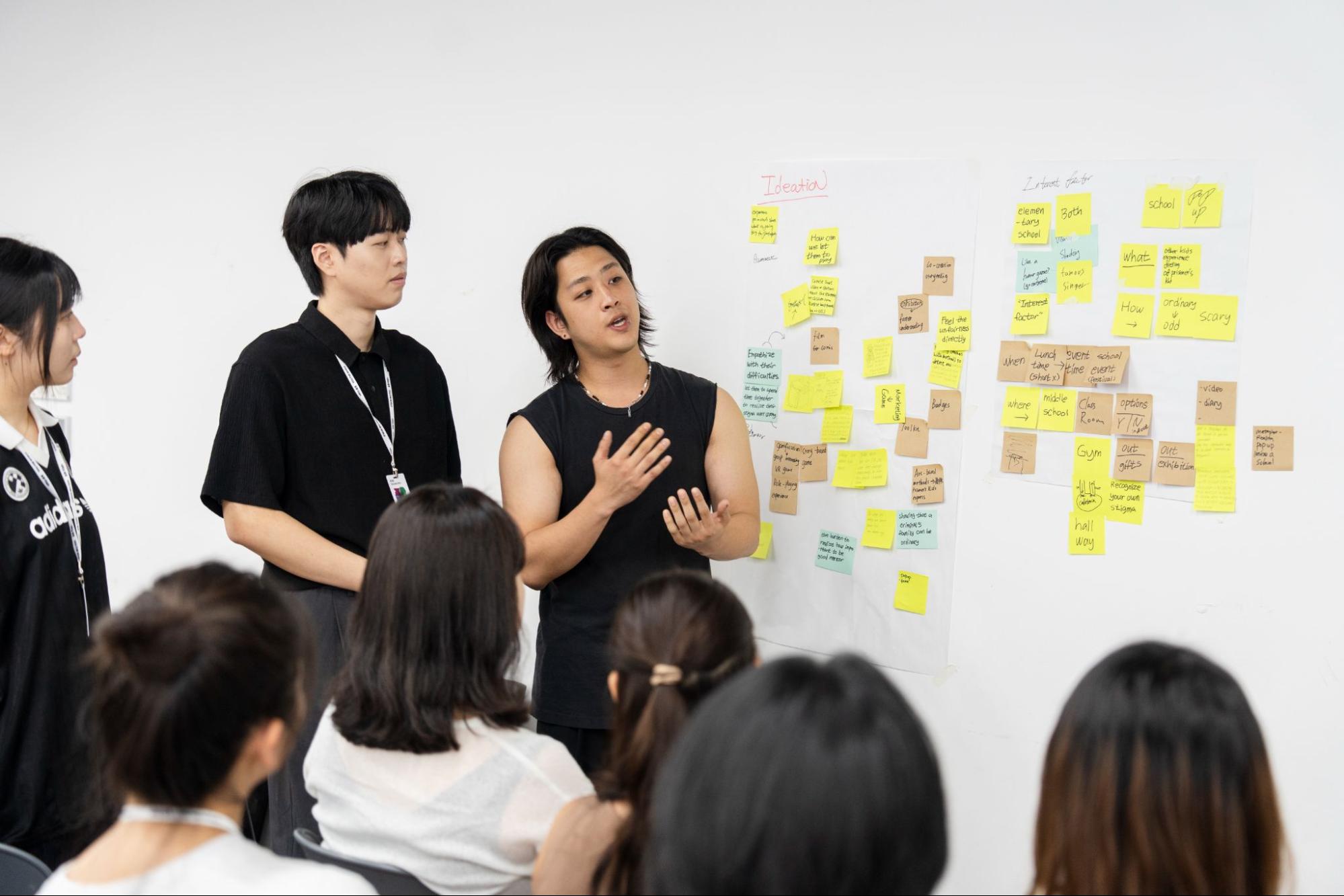
Team Kerorro – Reducing Social Stigma for Children of Incarcerated Parents
Focusing on marginalized youth, this team developed a multi-platform campaign to raise awareness and empathy through Instagram stories, school-based events, and public container pop-ups. Their project emphasized social inclusion and breaking stigma through storytelling and interactive engagement.
Team Allways – Rezonanz: Nonverbal Emotional Jewelry
Exploring nonverbal emotional expression, Rezonanz is a wearable that allows users to transmit and receive emotional cues via light and tactile responses. It supports mental well-being and connectedness, particularly across long distances or among people with communication challenges.
Team LOVE LETTER – AI Station for Digitally Underserved Populations
This team proposed a physical AI hub equipped with multi-sensory interfaces for those with low digital literacy. The inclusive station offers educational, emotional, and community support services through tactile, visual, and auditory interactions—bridging the digital divide in public spaces.
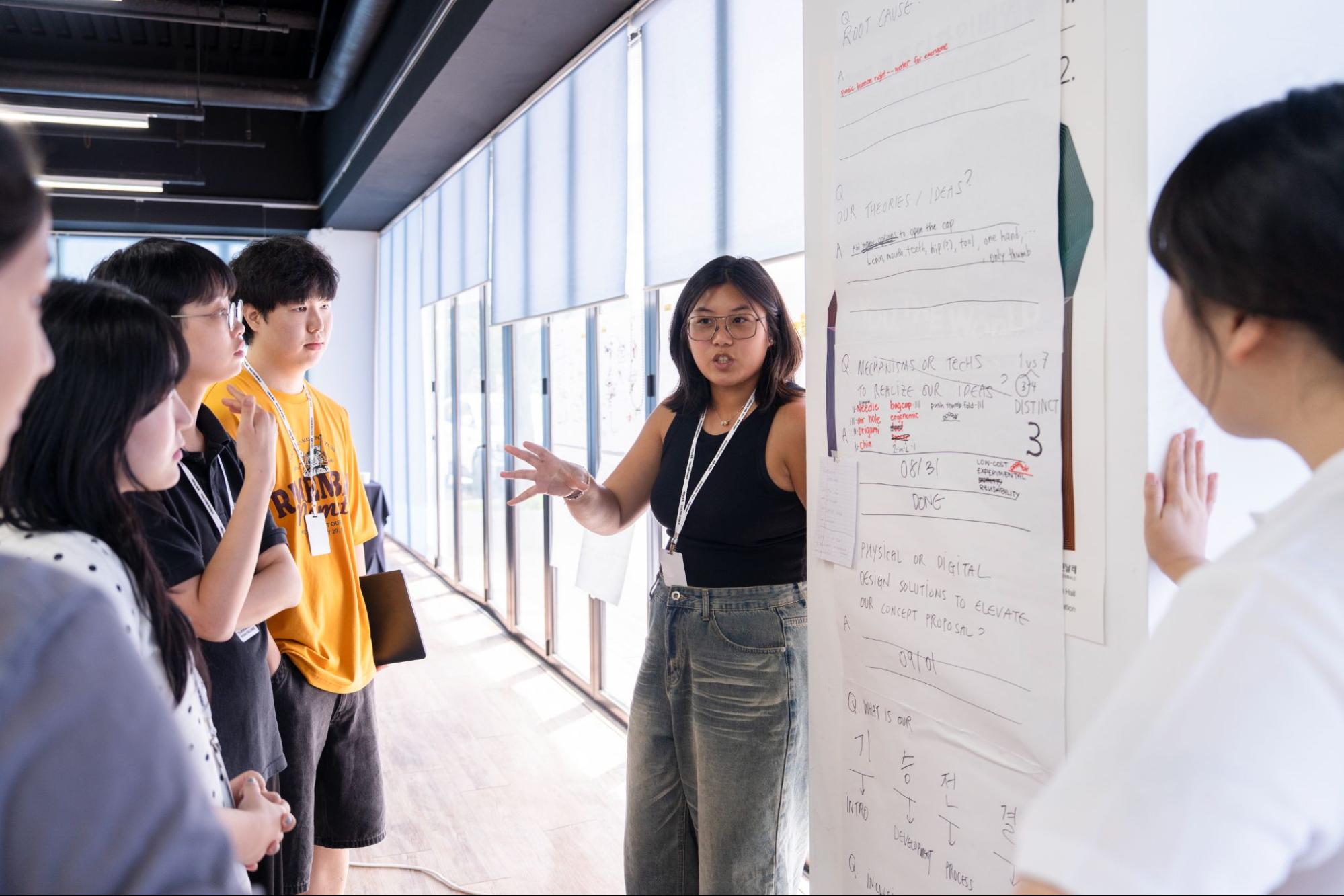
Team INCLU5 – EASIP: Accessible Water Bottle Design
EASIP redesigns the everyday water bottle to address overlooked accessibility barriers in grip, twist, and usability. Their inclusive packaging concepts like “Caterpillar,” “Loop,” and “Origami” aim to improve usability for people with limited physical ability, expanding the principles of universal design into consumer goods.