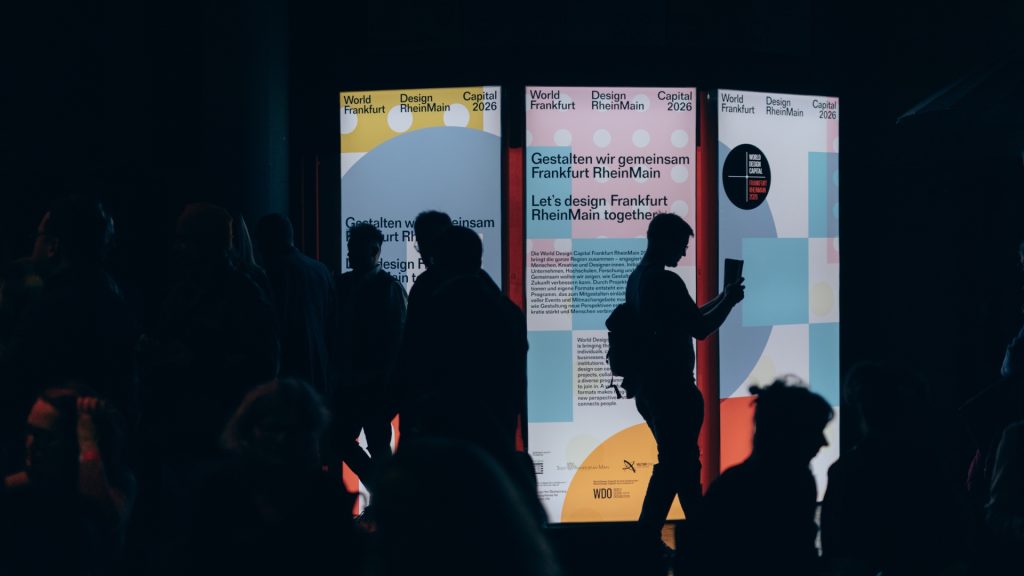
In 2026, Frankfurt RheinMain will be the first region in Germany to hold the title of World Design Capital, awarded by World Design Organization. Under the banner of Designing Frankfurt RheinMain Together, the region is launching a collective movement that focuses on how design can make a tangible contribution to a vibrant, democratic and economically sustainable future. The central question is as to how design can be used collaboratively to enhance living environments, strengthen social participation and actively shape the region’s transformation.
Against this backdrop, World Design Capital Frankfurt RheinMain 2026 brings together stakeholders from civil society, public institutions, local authorities, universities, culture and business to collectively assume responsibility for the region. Up to 2,000 events from around 450 projects will shape the annual programme, including large-scale in-house formats developed by WDC 2026 alongside a wide range of projects and collaborations. Throughout 2026, the entire region will demonstrate how design can act as a unifying force – and how this gives rise to a new, shared identity: from Darmstadt to Wiesbaden, Hanau, Offenbach and numerous other districts and municipalities, all the way to Frankfurt am Main.
“As so many people and institutions have come forward with their own ideas and projects in such a short space of time, it clearly demonstrates the region’s creative potential and its spirit of collaboration,” says Carolina Romahn, CEO of World Design Capital Frankfurt RheinMain 2026.
“Design represents a mindset rooted in collaboration and the courage to embrace change. We want this mindset to remain alive well beyond 2026 – in people’s everyday lives, in neighbourhoods, in schools and universities, in companies and associations, and within politics and public administration. Sustainable change emerges when collaborative design becomes second nature.”
The bid for the World Design Capital® (WDC) title was initiated by the Werkbundakademie Darmstadt. Between 2014 and 2020, it brought together the people who continue to shape the project today. As partners of World Design Organization, FRM gGmbH is leading the implementation of the project.
Shaping the Future: How WDC Frankfurt RheinMain 2026 Understands Design
World Design Capital Frankfurt RheinMain 2026 sees design not merely as an aesthetic practice, but as a tool that actively shapes democratic coexistence, economic transformation and ecological responsibility. How can design support sustainable urban development and create new ways of living and working? How can mobility and education be reimagined? How can environmentally conscious production and consumption be promoted through design? And can public administration be made more comprehensible and accessible through design?
These are questions that affect our future directly. In this sense, WDC Frankfurt RheinMain 2026 serves as a workshop where design is used as a means to actively test concrete solutions to societal challenges.
Funding, Support and Implementation
World Design Capital Frankfurt RheinMain 2026 is jointly funded by three main supporters – the State of Hesse, the City of Frankfurt am Main, and the Kulturfonds Frankfurt RheinMain – along with the region’s cities and municipalities. This has created a public budget of around 14.3 million euros. In addition, institutions, companies and foundations contribute a further 1.7 million euros through co-funding, contributions in kind and donations. The total project budget thus amounts to approximately 16 million euros. This shared approach to funding is also programmatic: it reflects the very core of World Design Capital 2026 – sustainable impact can only be achieved through collaborative action that transcends departmental, institutional and sectoral boundaries.
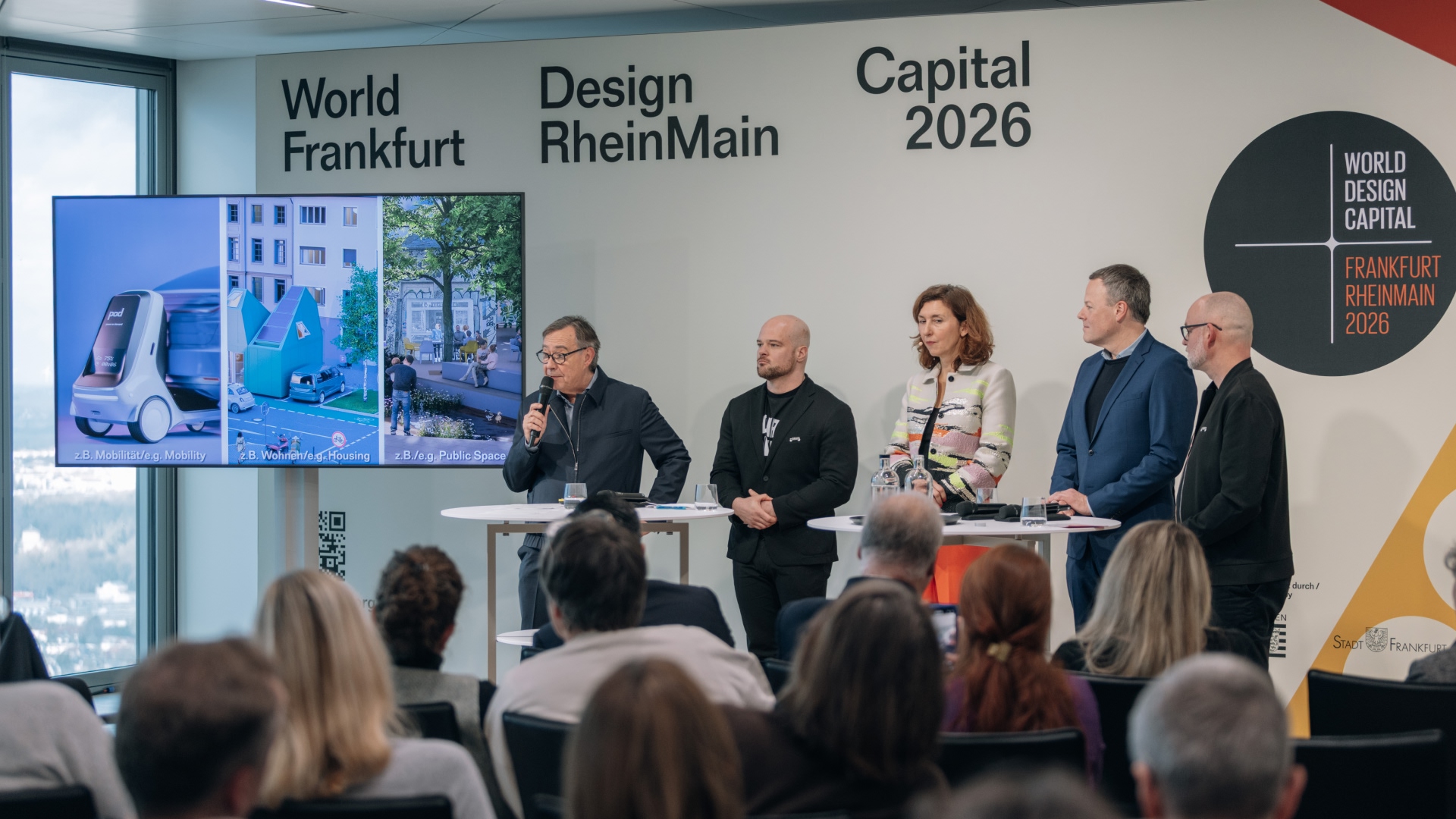
WDC 2026 extends its sincere gratitude to Deka and Groß & Partner for hosting the opening press conference at FOUR Frankfurt on 15 January 2026.
A Year of Lasting Impact
The core goals of World Design Capital 2026 lie in improving quality of life, strengthening regional identity, and raising the region’s international profile. At the same time, sustainable networks and structures of expertise are being created to secure innovation, climate protection, and democratic participation over the long term.
Accordingly, WDC 2026 sees itself as a catalyst far beyond the event year. At the heart of the initiative is a sustainable legacy — a lasting impact that firmly embeds democratic design in the Frankfurt RheinMain region. This is based on three pillars: tested practice through projects that demonstrate how design can enhance democratic processes; lasting structures such as institutions, roles, and dedicated spaces; and measurable outcomes through studies that track change and enable learning.
The legacy unfolds in two directions: from the top down, design is systematically integrated into public administration and politics — for example, through the Design Action Plan 2030, Chief Design Officers, and new models for public projects that ensure measurable implementation. From the bottom up, it strengthens democratic design skills across the region — through initiatives such as the FRM Design Hub, the WDC Campus, the Open – Design Week Frankfurt RheinMain, and professional development programmes.
What’s Behind the Title World Design Capital?
World Design Capital® (WDC) is an initiative of the internationally recognized, non-governmental World Design Organization (WDO)®. Awarded biennially, the designation honours cities that use design as a driver of economic, social, cultural, and environmental progress.
The Frankfurt RheinMain region (Germany) received the title for 2026 with its bid centred on the theme Design for Democracy. Atmospheres for a Better Life. The jury praised Frankfurt RheinMain for its unique collaboration, in which 31 cities and districts collectively embrace design not merely as a form of aesthetic creation, but as a tool for participation and innovation. According to WDO, the region demonstrates how international ambition, economic strength and cultural diversity can come together in an open, European spirit.
In recent years, the title has been awarded to the following cities: Torino (Italy), Seoul (Republic of Korea), Helsinki (Finland), Cape Town (South Africa), Taipei (Taiwan, Chinese Taipei), Mexico City (Mexico), Lille Métropole (France), Valencia (Spain), as well as San Diego (USA) and Tijuana (Mexico), marking the first ever binational recognition, Frankfurt Rhein Main (Germany), and most recently Busan (Republic of Korea) for 2028.
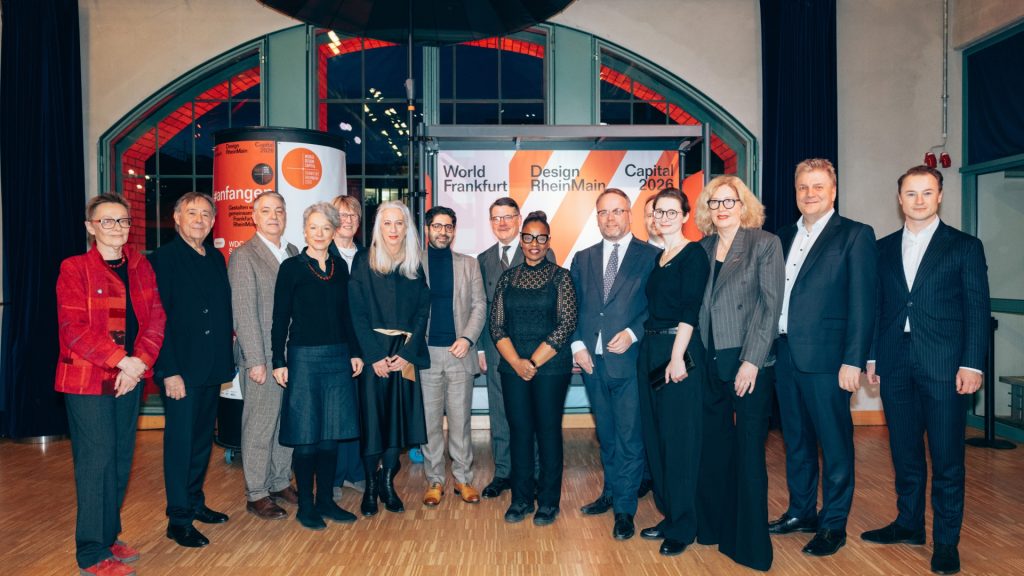
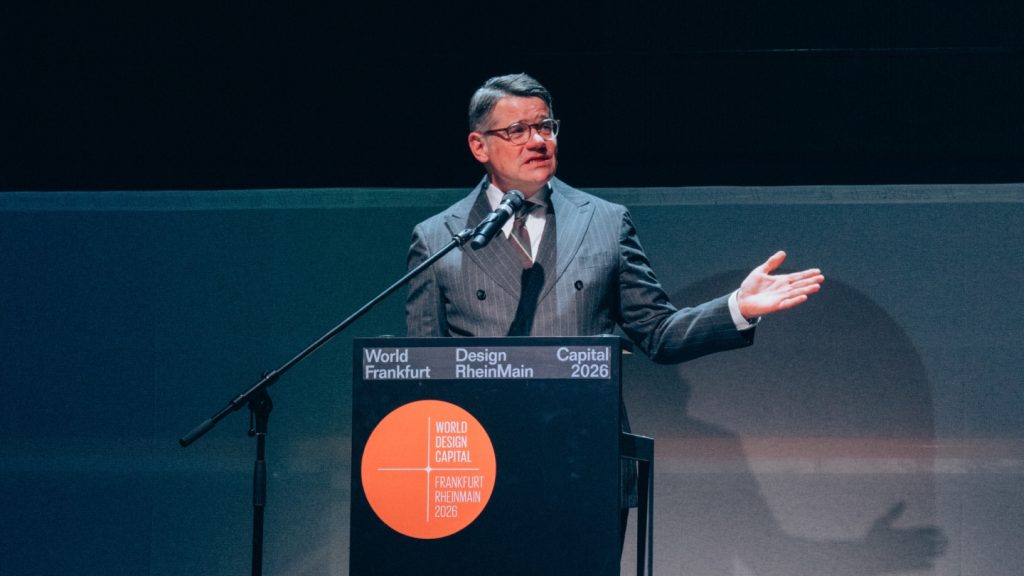
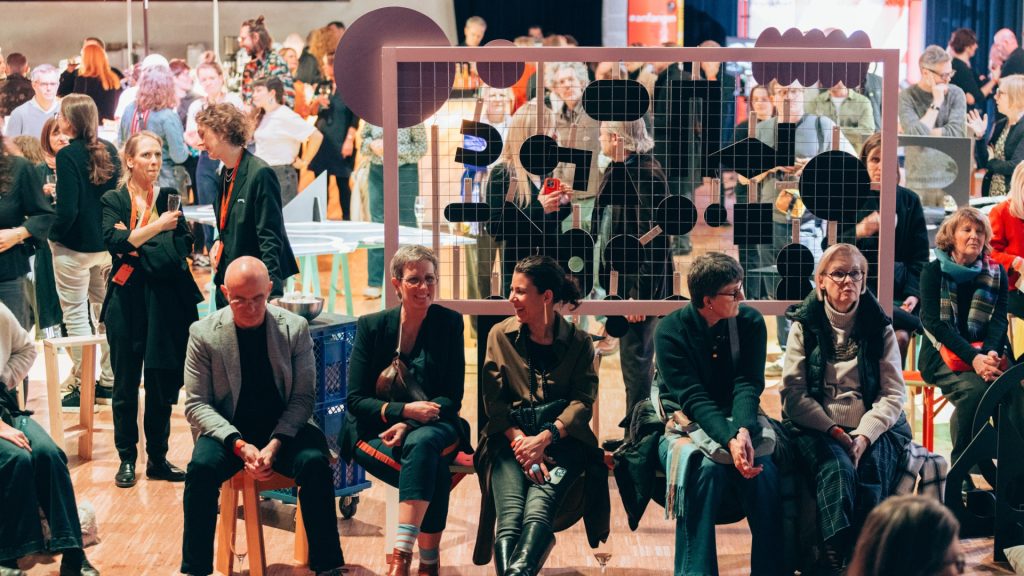
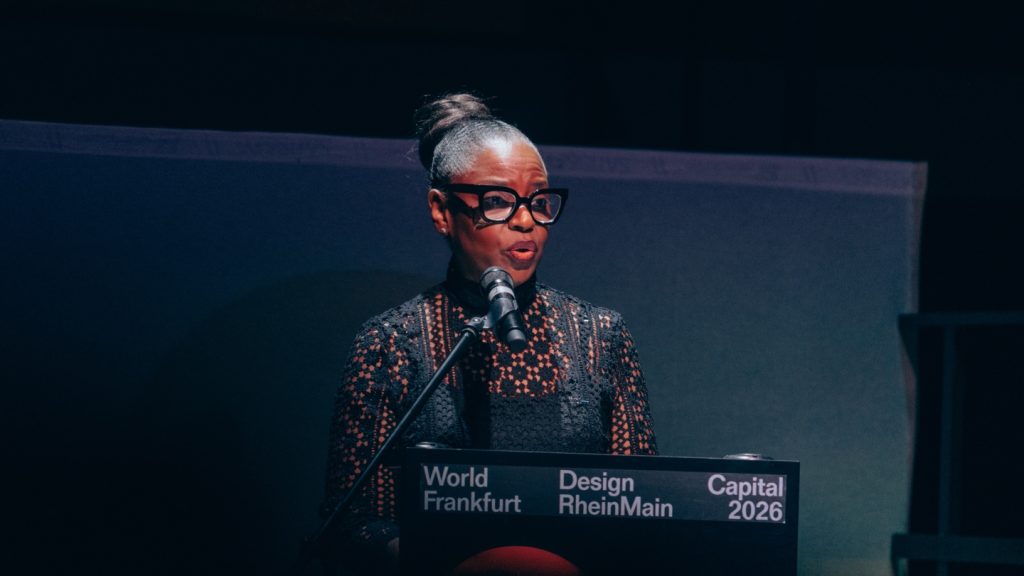
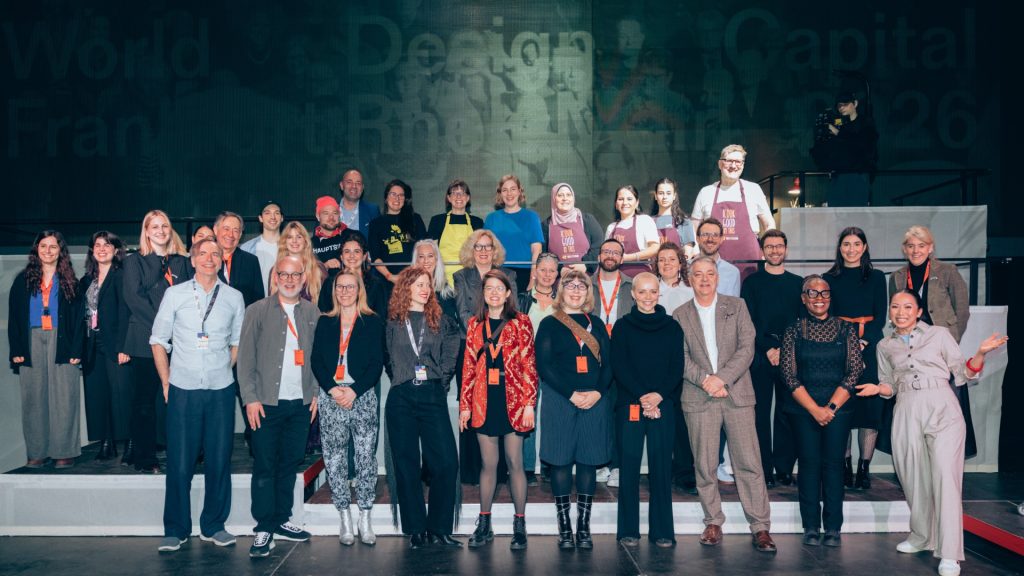
Snapshots from WDC Frankfurt RheinMain’s Grand Opening at Centralstation Darmstadt
Cover photo
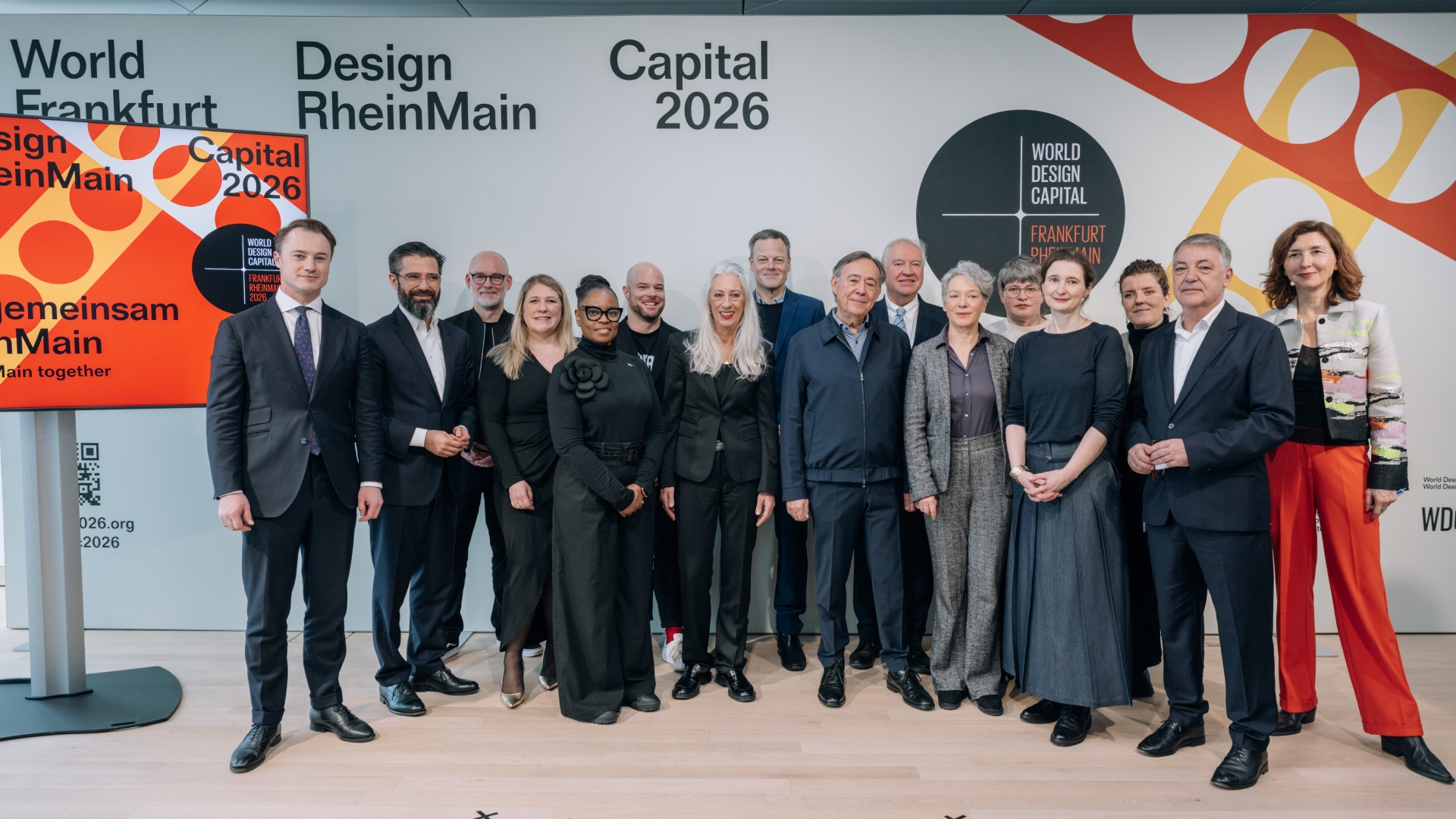
From left to right: Benedikt Kuhn, Umut Sönmez, Kai Rosenstein, Stephanie Wüst, Andréa Springer, Felix Kossok, Carolina Romahn, Philipp Gutbrod, Roland Lambrette, Ulrich Caspar, Ina Hartwig, Nicola Stattmann, Susanne Völker, Barbara Lersch, Matthias Wagner K, Cécile Schortmann.
Photo credit: Ben Kuhlmann