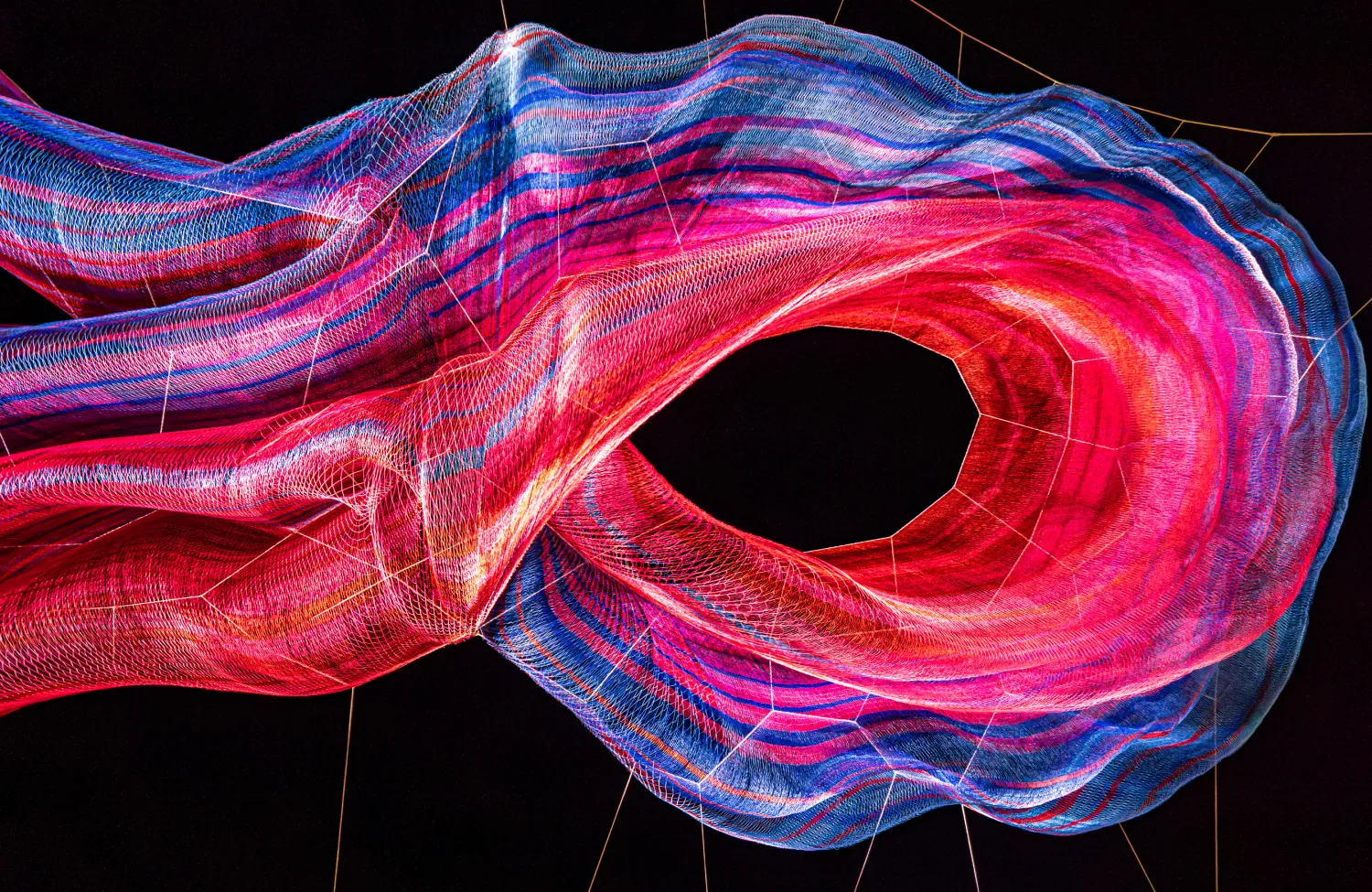
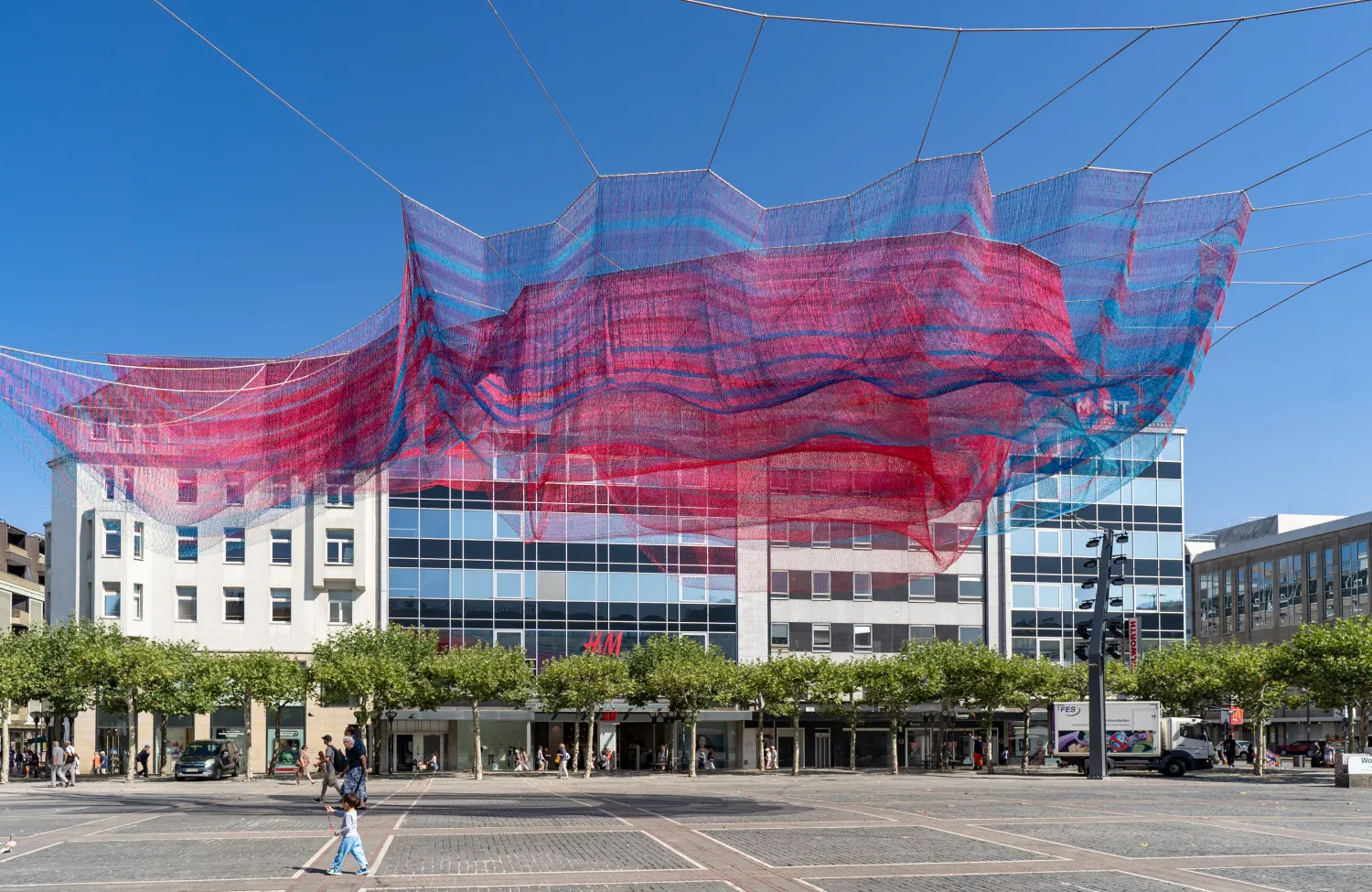
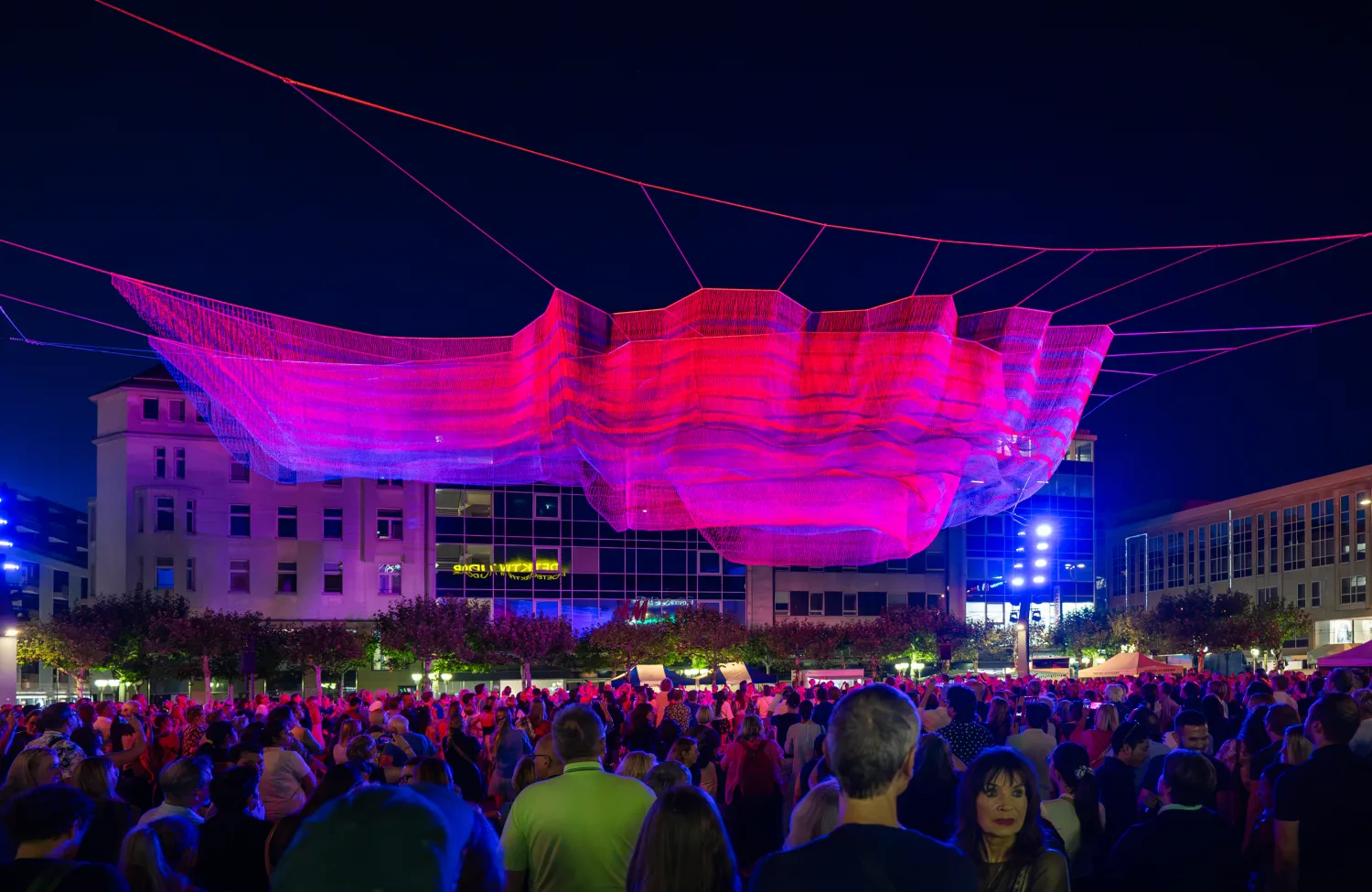
As part of World Design Capital Frankfurt RheinMain 2026, the spectacular net sculpture A Sky Full of Hope – Earthtime 1.78 Frankfurt by American artist Janet Echelman was officially unveiled above Konstablerwache on 11 August 2026 . Following extensive preparations and the successful installation of the artwork over the past few weeks, the square – often perceived primarily as a functional urban space – has gained a new open-air stage with a distinctive atmosphere.
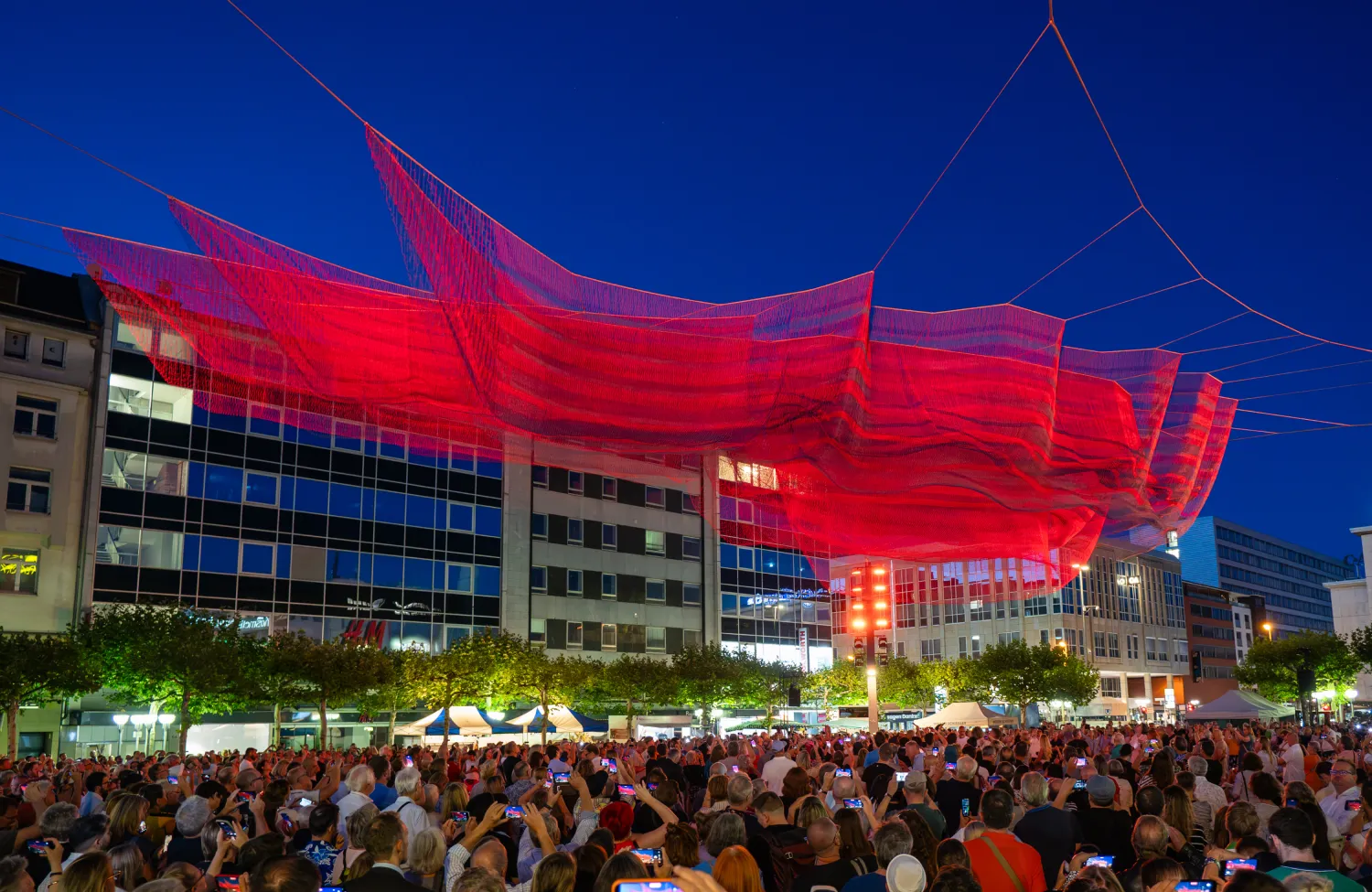
For the official opening, more than 3,000 people gathered on the Konstablerwache plaza to experience the illumination. By the afternoon, nearly all of the deckchairs beneath the artwork were already occupied. A specially composed lighting score brought the fabric structure to life after dark. At the same time, the neoclassical sound composition by Frankfurt-based composer Parviz Mir-Ali – blending analogue instruments with electronic soundscapes – enveloped the square through a 360-degree audio system. As waves of light merged with atmospheric sounds, the artwork, suspended more than seven metres above the ground, unfolded its full impact against Frankfurt’s summer night sky.
Mike Josef, the city’s mayor, who, together with the artist, officially presented the sculpture to the local community said: “In times of global crises, problems everywhere and polarization, one might well ask: who still needs art? Friedrich Schiller had a simple but very illuminating answer to that: ‘Art is a daughter of freedom’.”
Art documents history, critiques injustices, highlights values and norms, facilitates self-reflection and envisions the future. Through its diversity and expressive power, art remains an indispensable mirror of society. “One can certainly debate the significance of individual works of art. But we cannot do without art, because it plays an important role in the fight against intolerance towards other cultures and opinions, against racism and other forms of social exclusion. I am delighted that A Sky Full of Hope is now part of Frankfurt and I hope that people will embrace this work with an open mind and curiosity, and that it will spark conversation amongst them.”
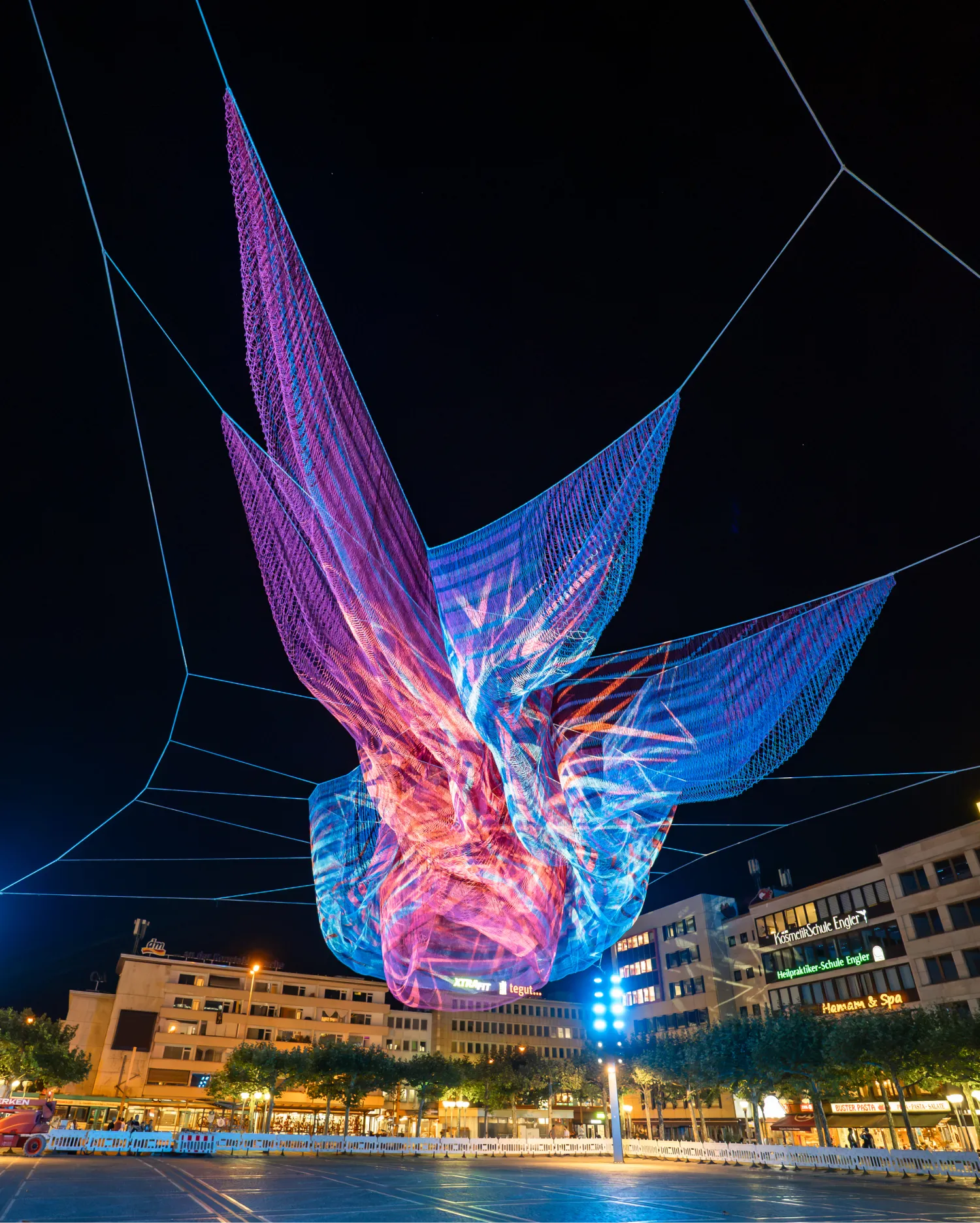
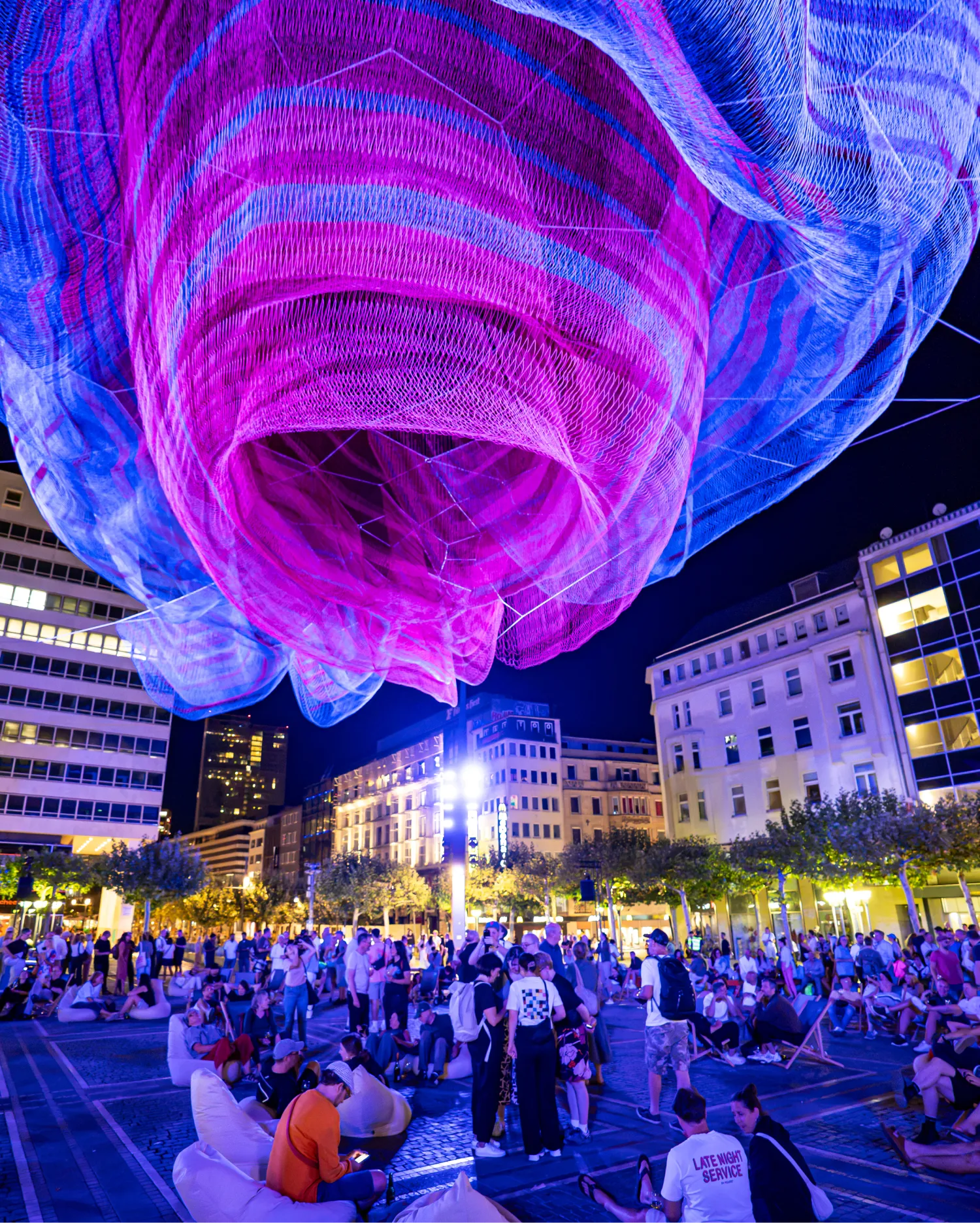
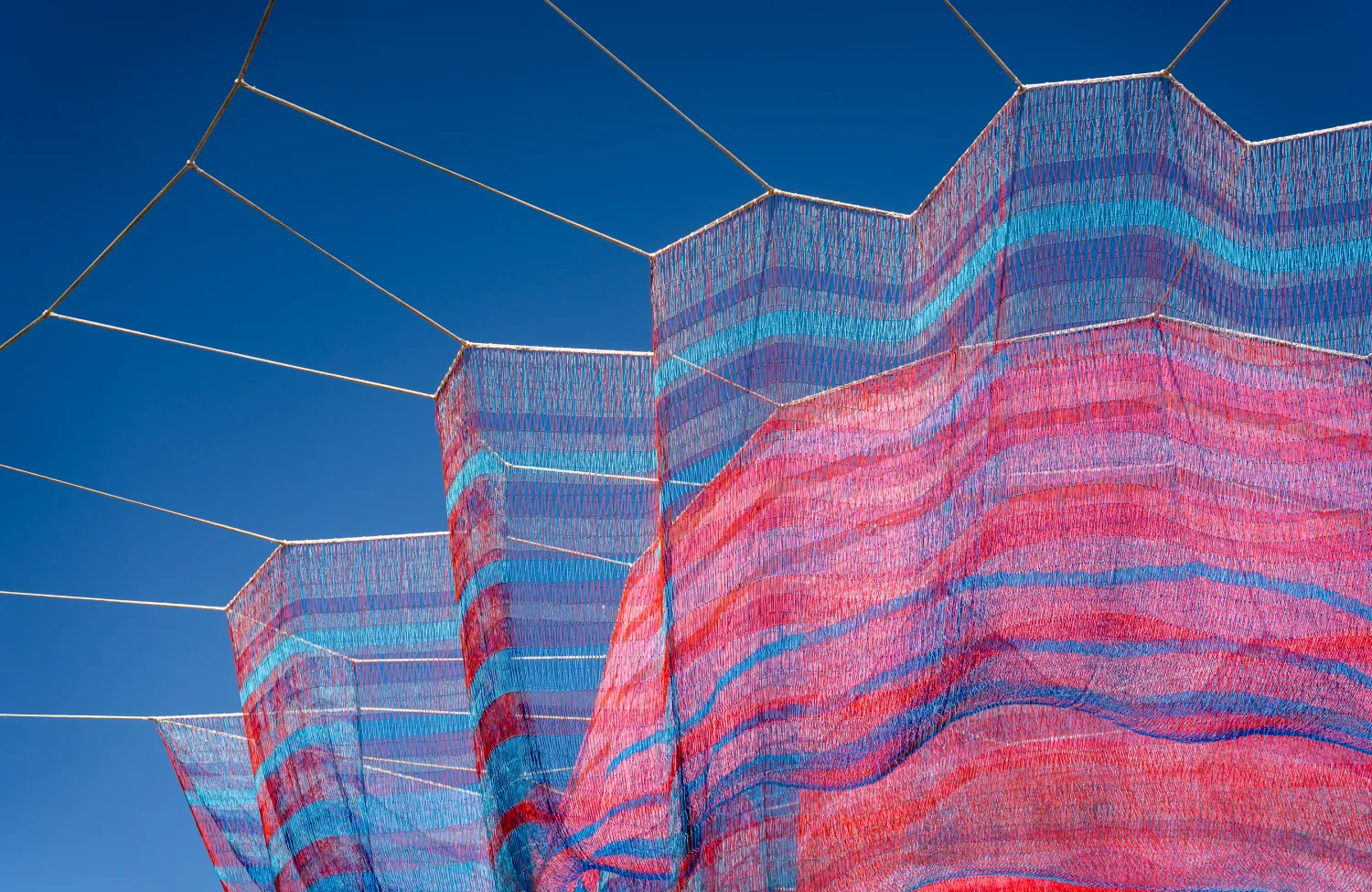
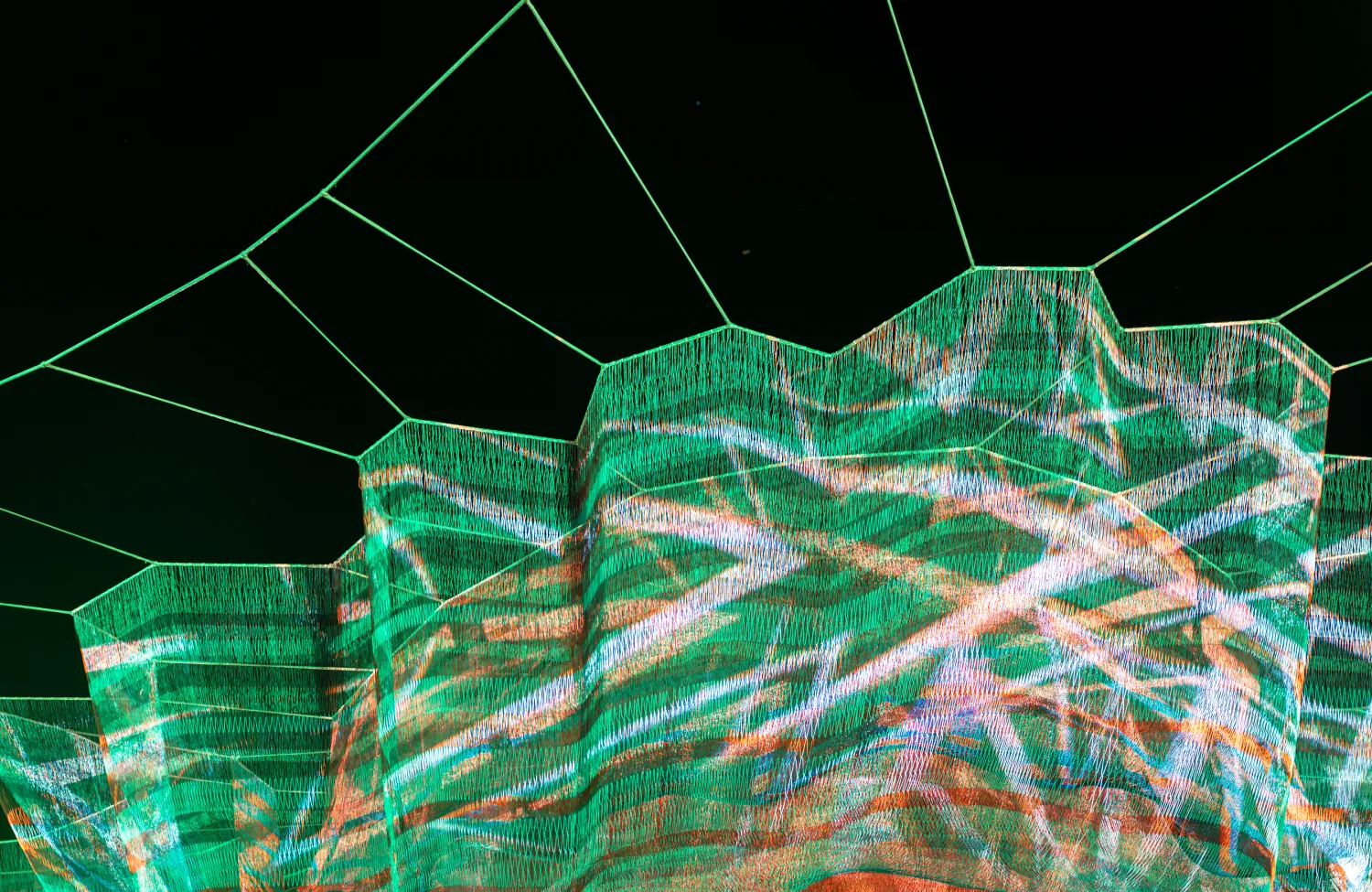
Floating more than seven metres above the ground, the artwork consists of a flexible load-bearing net structure made of high-strength polymer fibres such as those used in aerospace engineering. Attached to it are coloured net segments measuring up to 4.5 metres in length, which have been knotted using traditional fishing-net techniques. A total of approximately 103 kilometres of twine were used to create the piece.
The Frankfurt installation is part of Echelman’s Earthtime series. The number in the title represents the microseconds by which a day on Earth has been shortened due to the acceleration of the planet’s rotation caused by a single geological event. Earthtime 1.78 refers to the devastating Tōhoku earthquake off Japan’s east coast in March 2011, which triggered a devastating tsunami and the Fukushima nuclear disaster – a local event with global consequences. Measurements of the Pacific wave movements generated by the earthquake served as Echelman’s inspiration for the sculpture’s sweeping form.
The artwork is constantly changing in response to the interplay of wind, weather and light. Reflecting the WDC 2026 theme Design for Democracy, the net serves as a reminder that we are all part of complex and interdependent ecological and social systems. It also symbolizes social cohesion: it is only through the connection of the knots that stability is achieved – an apt metaphor for the people from 178 nations who call Frankfurt home.
Yesterday’s opening marks the beginning of a new chapter for Konstablerwache. The installation will remain in place for an initial period of three years, though it will be temporarily taken down during the winter months. It represents a long-term endeavour to provide this rather austere and unwelcoming location with a new at-mospheric and social focal point – and, in doing so, to transform the square into a vibrant place for people to meet, participate and spend time together.
International examples from cities such as London, Sydney and Vancouver have already demonstrated the power of Janet Echelman’s installations to bring people together. In these cities, communities have embraced the spaces beneath her floating sculptures, using them for a wide range of cultural, sporting and social activities. Similar uses are both envisioned and encouraged in Frankfurt, with opportunities for local communities, cultural organizations, sports clubs and other interested groups to become actively involved.
Together with established institutions such as the weekly farmers’ market, the space beneath the artwork has the potential to evolve into a central and vibrant place for people to come together – one that gives visible expression to Frankfurt’s diversity.
On the installation, Dr Ina Hartwig, Head of the Department of Culture and Science, shared: “Janet Echelman’s work focuses on experiencing – or rediscovering – a place. Konsta-blerwache is being transformed, allowing us to perceive and experience it in a new way. For Janet Echelman, the most interesting places are precisely those that were previously anonymous or even invisible. Echelman’s works are among the most highly regarded examples of contemporary art in public spaces. Frankfurt is therefore gai-ning an artwork of exceptional artistic value – right in the heart of the city, accessible day and night and free of charge. In other words: art for everyone.”
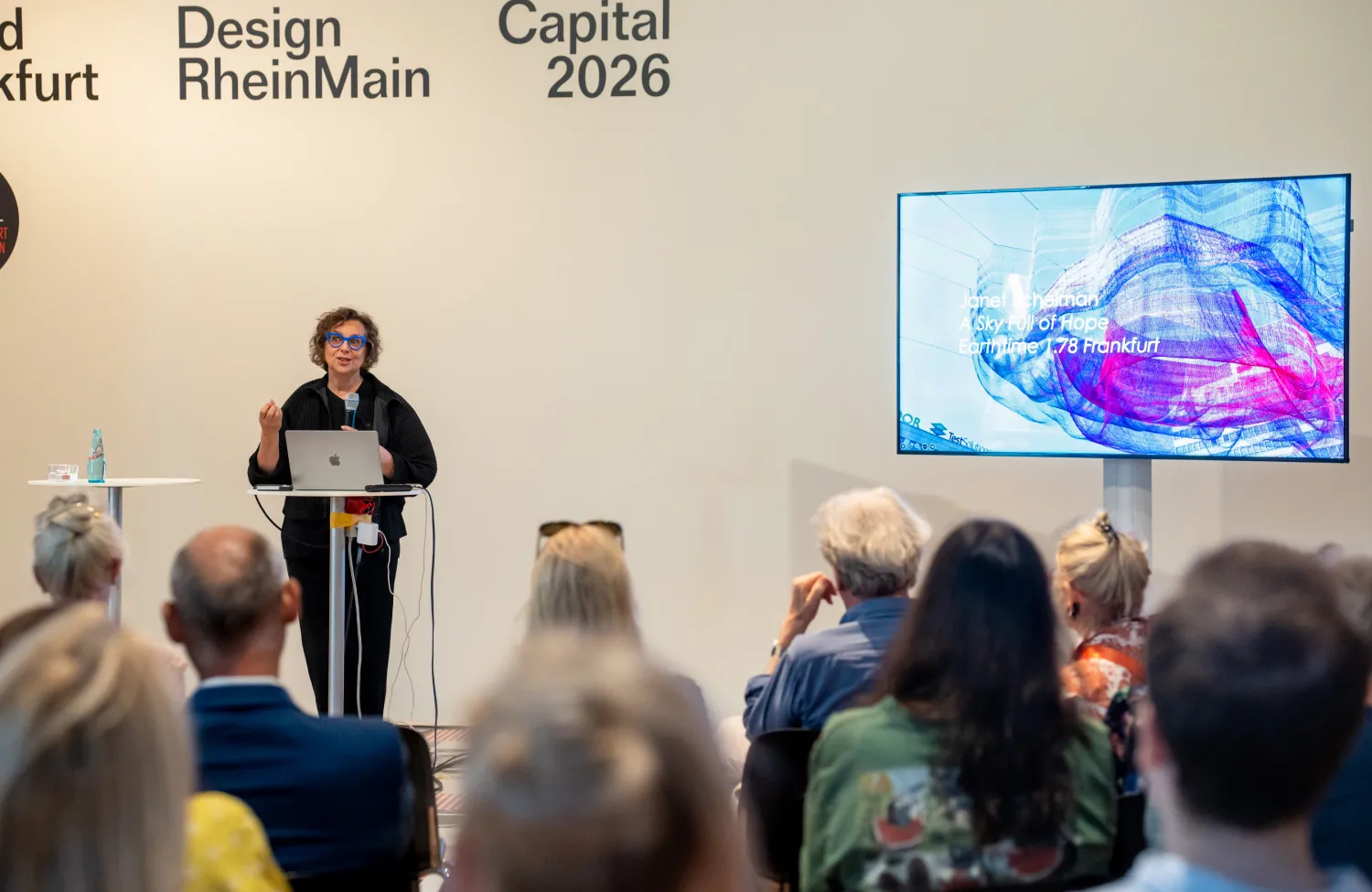
Artist Janet Echelman on her work: “I invite the people of Frankfurt to make this space their own and use it in whatever way feels right to them. I like to leave the design to nature – allowing it to take over the choreography – and to the people who encounter the work and help determine how it is used. In this way, it becomes their sculpture. This artwork can be experienced as freely as the air we breathe – with no ticket, specialist knowledge or invitation required.”
Carolina Romahn, CEO of World Design Capital Frankfurt RheinMain 2026 adds: “Art in public space encourages us to negotiate what we want from our urban spaces – in terms of atmosphere, experience and function. With Janet Echelman’s A Sky Full of Hope, a square in the centre of Frankfurt that has been neglected for years gains an emotional dimension and renewed attention. It is already sparking a public debate about the future of Konstablerwache: how it might evolve from an uninspiring place of consumption into a space where people connect and share cultural experiences. Echelman’s poetic net sculpture symbolizes the way we live together as a society. We are part of complex systems of interdependence – ecological, spatial and social. Every knot counts; every connection contributes to the stability of the whole. This is precisely what the WDC theme Design for Democracy. Atmospheres for a better life’ represents: diversity, complexity and the ability to find new forms of balance within a constant interplay of forces for a future worth experiencing. I am eager to see what new energy will emerge after the opening and how civil society will reclaim this space in the heart of the city.”
What is WDC 2026?
World Design Capital® (WDC) is an initiative of the globally recognized, non-governmental World Design Organization (WDO)® that honours cities using design as a driver for economic, social, cultural and environmental progress. Frankfurt RheinMain (Germany) has been awarded the title for the year 2026 under the theme Design for Democracy. Atmospheres for a Better Life. In previous years, the title has been awarded every two years to the following cities: Turin (Italy), Seoul (South Korea), Helsinki (Finland), Cape Town (South Africa), Taipei (Chinese Taipei), Mexico City (Mexico), Lille Métropole (France), Valencia (Spain) and San Diego (USA) and Tijuana (Mexico) as the first binational designation. Busan (Republic of Korea) has been named World Design Capital® 2028.


