
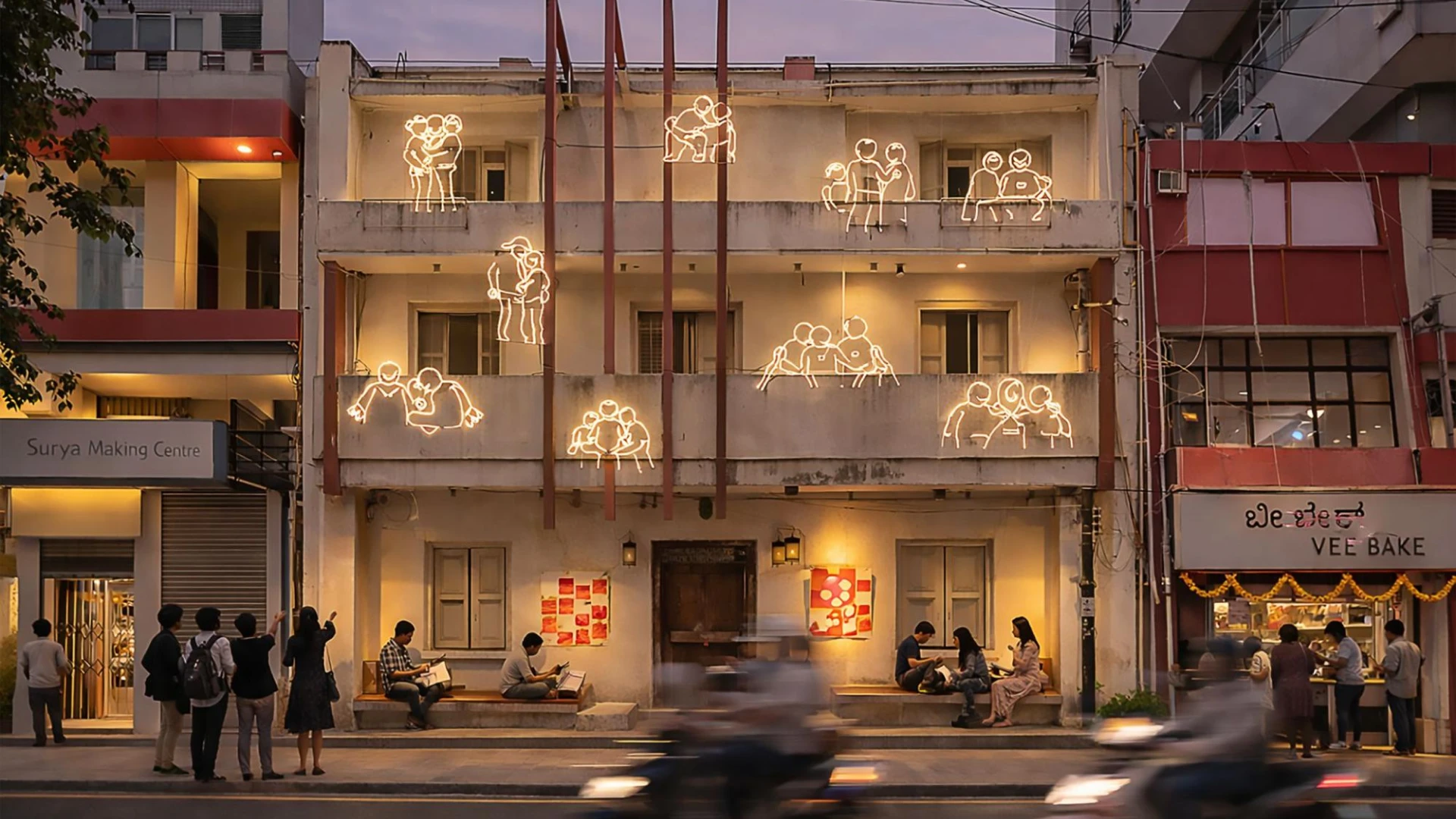
Image credit:Photo credit: Manu Neelakandhan
Designpete:
A new economic vision for Bengaluru’s historic marketplaces
In the heart of one of Bengaluru’s oldest and most vibrant shopping districts lies Veerapillai Street, a bustling commercial hub where businesses, residential neighbourhoods and a growing cultural scene intersect. A historic marketplace, it is also one of three key project sites for WDO’s World Design Protopolis (WDP)™ Bengaluru programme.
Led by Abhijit Bansod, Founder and Creative Director of Bengaluru-based Studio ABD and Manu Neelakandhan, Founder of brand and strategy design agency ideaCulture, the first phase of the project has involved on-the-ground research, observation and conversations with local businesses and residents.
What this ‘discovery process’ revealed is a street shaped by layers of architectural, commercial and social history, reflecting both Bengaluru’s past and the city it is becoming. Bansod and Neelakandhan often returned to a central question throughout their research: how can development drive economic progress while preserving the character of the neighbourhood and its connection to the people who call it home?
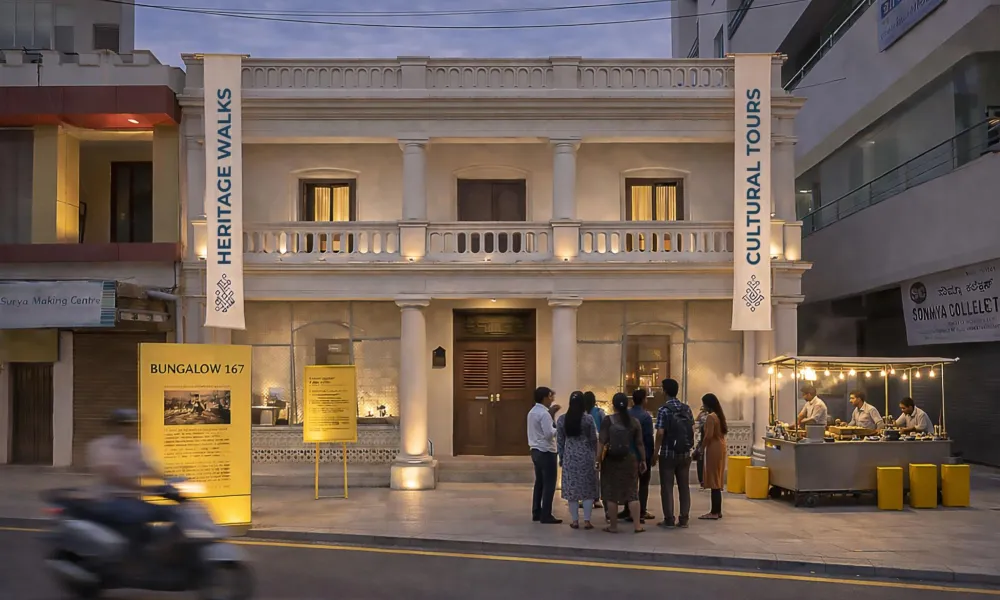
“How markets around the world demonstrate that culture itself can attract footfall and generate economic activity, think of a Souk or Bazaar as a concept,” shares Neelakandhan. At Veerapillai Street, the team’s research points to potential in cultural tourism, building social engagement and new forms of business alongside existing commerce. Bansod and Neelakandhan also recognize that this is as much a marketing challenge as a design one, that the economic potential of more footfall and new revenue opportunities has to be understood by the people who will participate in it.
“If people are not aligned with you and they don’t see that it’s positively impacting their daily life, it will be very tough to execute any design solution,” notes Bansod. For Neelakandhan, part of that opportunity is economic: “the product you’re actually peddling is culture, and not just the products you’re selling.”
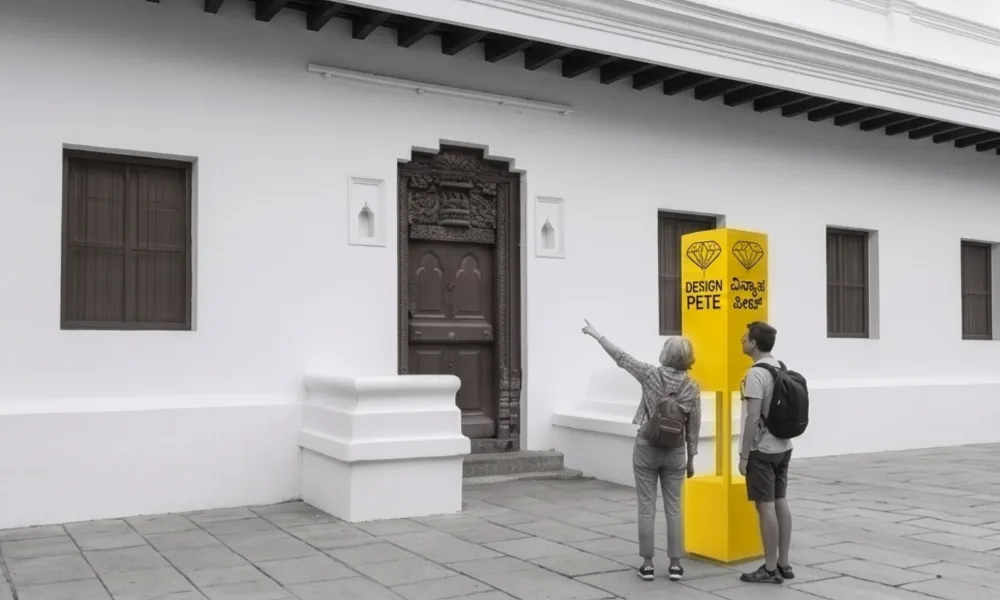
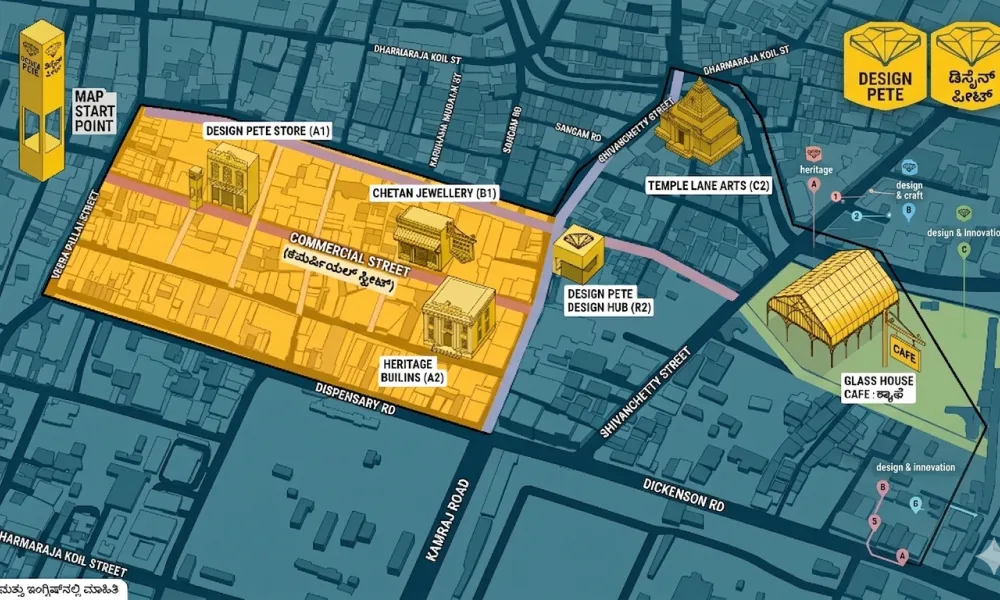
For the duo, the opportunity lies in connecting tradition and modernity, creating a contemporary experience that still feels distinctly Bengaluru. These findings led to the conception of Designpete (ಪೇಟೆ, pronounced peh-teh/pété), a curated contemporary marketplace rooted in Bengaluru’s traditional form: pete, meaning marketplace. The name itself reflects the proposition, design brings modernity, while pete retains a connection to the city’s local history, language and vocabulary.
“Designpete seemed a very natural fit because it describes very clearly what our intent is, design brings a modernity and pete, meaning market, holds on to the local language tradition. It’s a good wordplay that defines our intent without explaining too much what to expect.”
Bringing together commercial, creative, cultural and community experiences, the Designpete proposal reimagines the marketplace as a vibrant space for exploration and exchange. From night markets and heritage walks to alleyway art galleries, pedestrian-friendly zones, narrative maps and street art celebrating local languages, the proposal explores new ways for residents and visitors to experience the city. At its core, Designpete seeks to celebrate local culture and identity while creating new opportunities for neighbourhood businesses and the wider community.
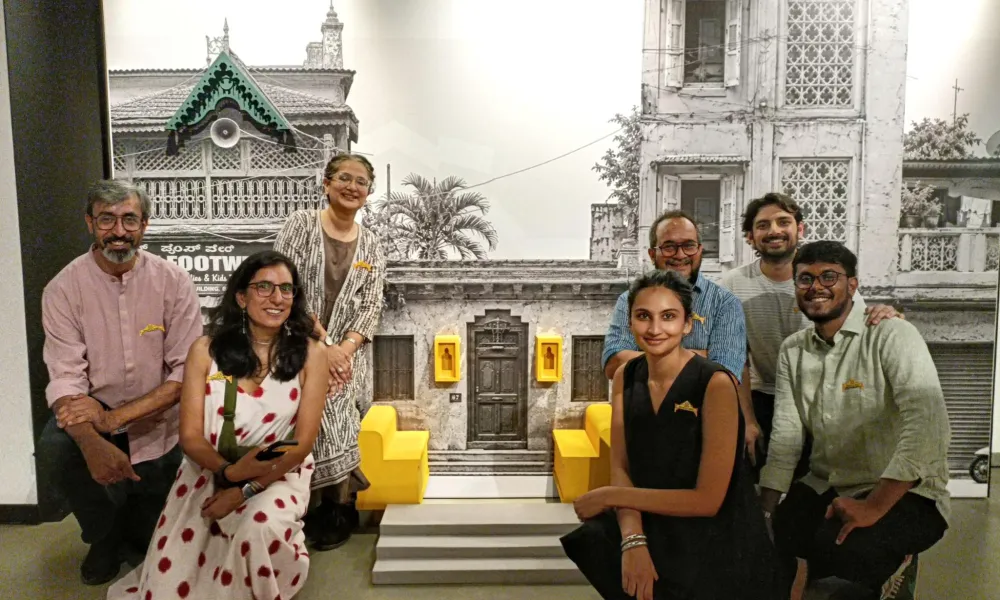
For Bansod and Neelakandhan, Veerapillai Street has the potential to serve as a first prototype, establishing a model that could inspire other Designpetes across Bengaluru. They also see the project contributing to the broader ambitions of Brand Bengaluru, an initiative by the Government of Karnataka to drive urban transformation across the city. “Bringing design into these conversations represents a significant step towards more collaborative approaches to shaping the city’s future.”
And through the World Design Protopolis platform, the government is now actively engaged with the design community, creating opportunities to connect design research and local knowledge with urban planning and decision-making.
In this sense, Designpete offers a way to explore how design can generate new economic opportunities while preserving the cultural heritage and local identity that make Bengaluru unique. More broadly, it demonstrates how local traditions, community needs and economic development can come together to inform a more inclusive approach to urban transformation.
“When we say economic development, it’s not just for the people who are conducting business over there, but also building a canvas for others to directly or indirectly benefit from this change. It can’t be just the neighbourhood alone, the city as a whole should see some economic benefits from it.”
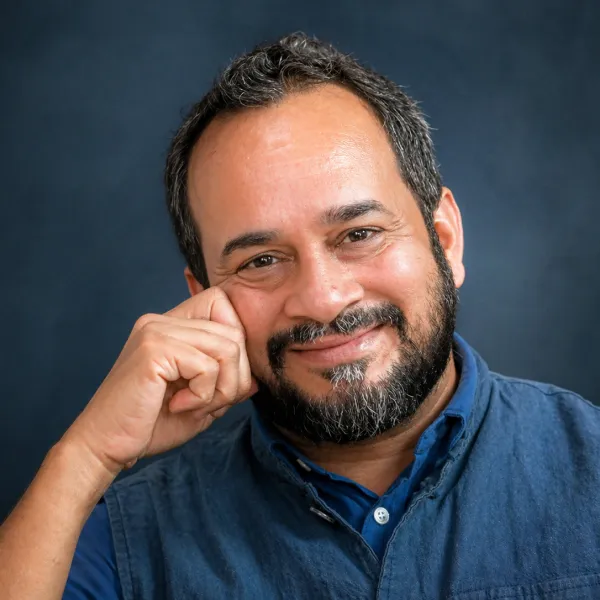
Abhijit Bansod is the Founder and Creative Director of Studio ABD in Bengaluru. A leading voice in the Indian design community, Abhijit believes products are not just consumable but animated anecdotes. His work aims to seamlessly connect user, brand, trends and technology to create a 360-degree design experience.
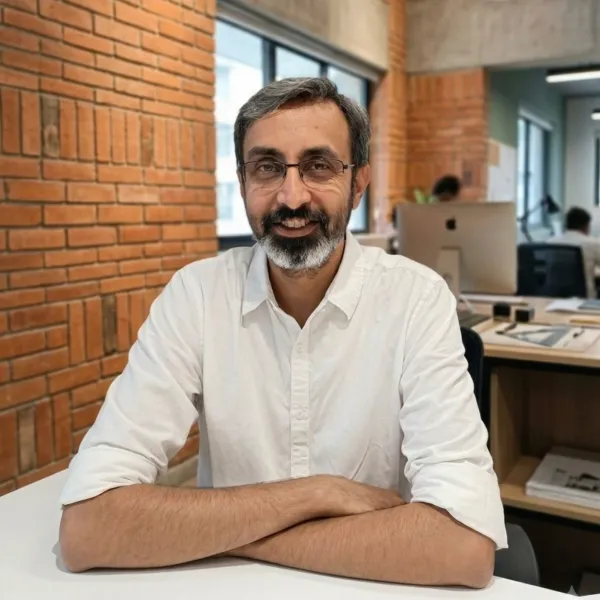
Manu Neelakandhan is the Director and Founder of ideaCulture, a brand and strategy design agency that explores design strategy as a function of human emotions and psychology. He has also been closely associated with Idiom Design for several years, and his work as part of the Association of Designers of India has brought design to the forefront of public discourse in Bengaluru.


