
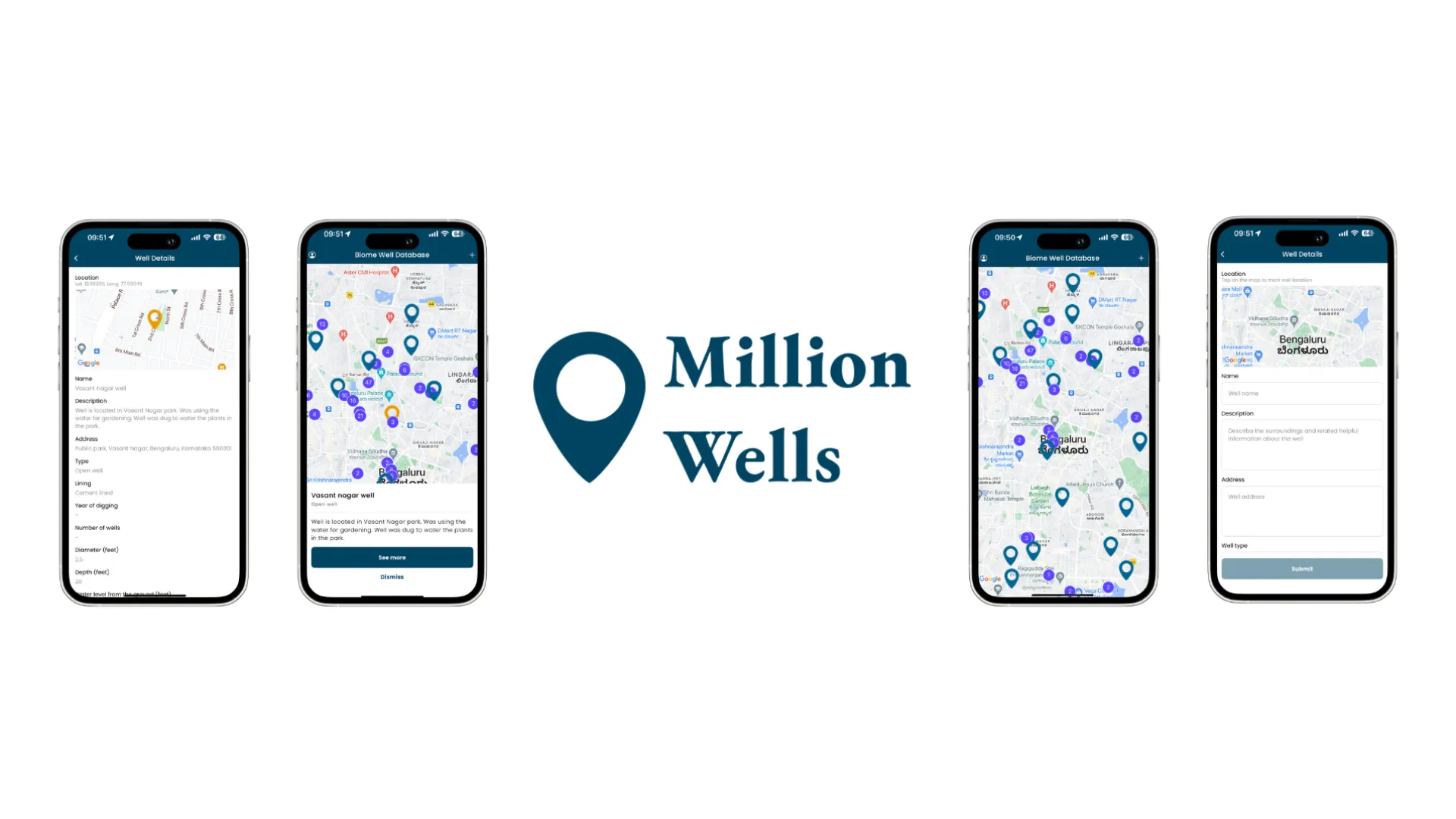
Image credit: Design for Good
One million wells,
one shared future
In Bengaluru, water is becoming increasingly scarce. As India’s fastest-growing technology hub, the city has, for several decades, been dealing with mounting stress on its aquifers due to rapid urbanization and climate variability. Once supported by an interconnected system of lakes and groundwater channels, this ecological network has been steadily weakened by development patterns that outpace natural recharge.
Since 2015, Bengaluru-based non-profit Biome Environmental Trust has been working to help replenish the city’s groundwater table. Their Million Wells Campaign has brought together residents, well-diggers, community organizations, researchers and local governments around a common goal: to build one million recharge wells and improve water security in Bengaluru.
By 2023, years of fieldwork had generated an extensive body of data on Bengaluru’s recharge wells, and Biome Environmental Trust faced the growing challenge of maintaining this information across an expanding network of contributors. Through an existing relationship with UK-based design researcher Adira Andlay, the organization was able to partner with global non-profit alliance Design for Good to explore how design could support and amplify the campaign’s long-term impact.
As part of the Design for Good initiative, a multidisciplinary team comprising Adira Andlay and Xin Wen from the Royal College of Art and Rocio Calderon of McKinsey & Company conducted research to identify where design could deliver the greatest value. The team selected the Million Wells Campaign as a priority area for additional research and technical support, and, in collaboration with Biome, developed a centralized digital platform to improve access to groundwater data for the practitioners and communities driving change on the ground.
From there, the Million Wells App was born.
“The Million Wells App builds on the knowledge, skills and relationships that already exist within Bengaluru’s groundwater ecosystem. Instead of introducing a completely new way of working, the platform supports the people already driving change, from well-diggers and community members to researchers and NGOs.”
The app works by transforming fragmented datasets into a shared resource, allowing Biome staff, local well-diggers, researchers and community members to map new wells, record information such as dimensions and yield and access localized data on existing wells.
A central part of the development process involved working with the Mannu Vaddars, traditional well-diggers whose generational expertise underpins much of Bengaluru’s groundwater knowledge system. To inform the app’s design, Andlay, Wen and the design team “worked closely with Biome and developed questionnaires and research activities to better understand the well-diggers’ day-to-day practices, their use of smartphones and digital tools, and the types of information they considered most valuable to record and access.”
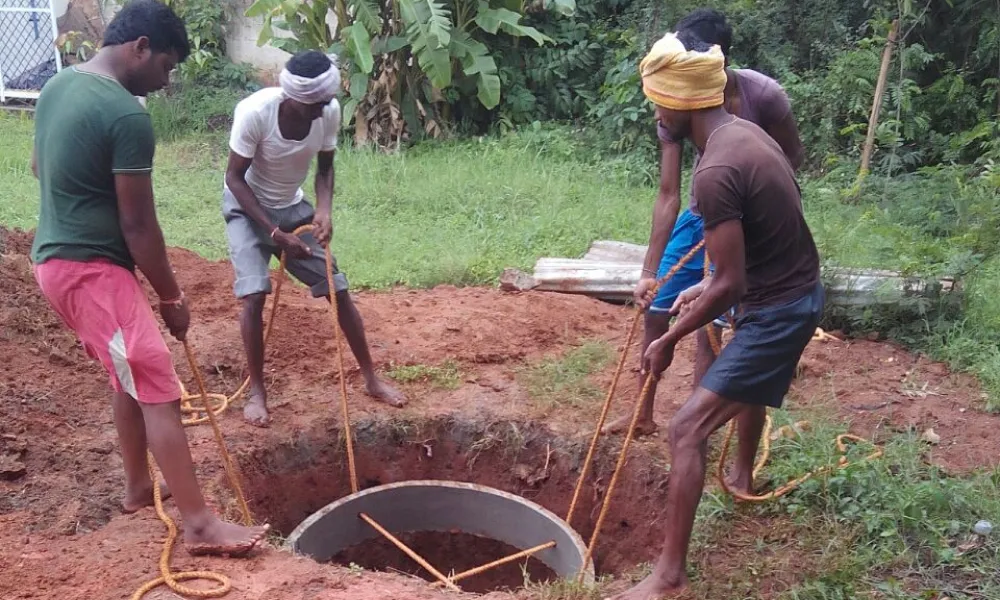
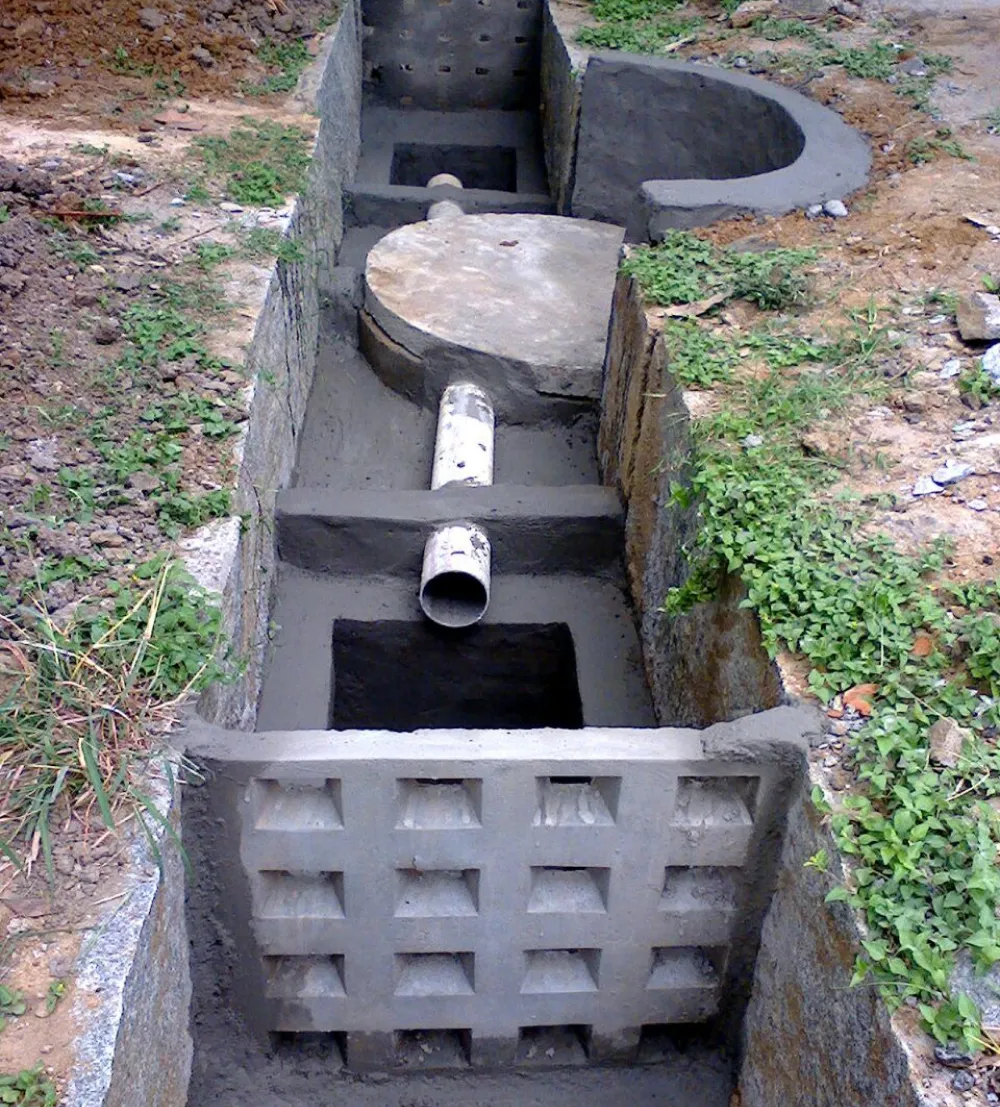
What the team’s field research consistently highlighted was the need for simplicity and clarity in any digital tool introduced into this context. As noted by Andlay and Wen, “one of our priorities was creating a platform that could be used by people with different levels of technical experience and backgrounds. Throughout the project, we worked closely with Biome, well-diggers and other stakeholders to understand their needs and ensure that the app reflected the realities of how they work.”
These insights shaped the platform’s design, resulting in streamlined interfaces, minimal data entry steps, and navigation designed for use in variable field conditions. “The project reflects the idea that technology should support and amplify local expertise rather than replace it. The app serves as a way of documenting, sharing and building upon the knowledge of the Mannu Vaddars, helping ensure that their experience and contributions remain visible within a growing city-wide movement for groundwater restoration.”
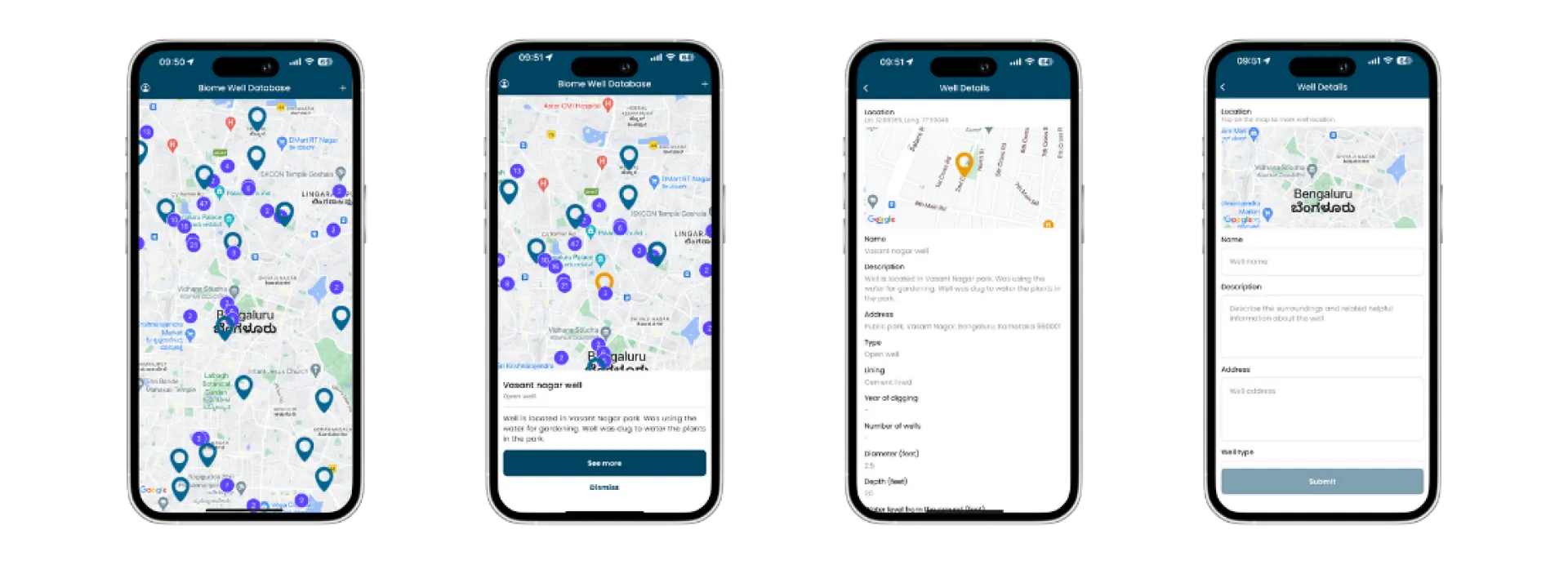
The transition from prototype to live system was made possible through pro bono development by Atta Systems, and since its deployment, the platform has facilitated the mapping of over 600 of wells across the city. “When we handed over our visual prototype and design recommendations, we didn’t know whether the project would secure the resources needed to move beyond the concept stage,” share Andlay and Wen. “That’s why it has been incredibly rewarding to see the Million Wells App fully developed and available in the app store two years later.”
In addition to the wells mapping, the app has improved visibility of the scale of the Million Wells Campaign, enabling better coordination between stakeholders and making it easier to understand and track progress. While long-term environmental outcomes will of course take more time to measure, early indicators suggest that the app is already helping to strengthen coordination and knowledge-sharing across the network.
“The Million Wells App is a great example of a Design for Good project that worked closely with the on-the-ground non-profit to understand what they needed,” shares Helen Robertson-Smith, Impact and Partnerships Lead at Design for Good. “Together, they designed a product that is making an impact for the people and environment. We will continue following the progress of the app and broader campaign to monitor the benefits for the water table, well diggers and people who rely on the wells for water.”
For their part, Andlay and Wen hope that the “project demonstrates how thoughtful design and technology can support community-led environmental action. The real success of the app will not be measured by the technology itself, but by how effectively it helps people work together to restore groundwater, share knowledge and build long-term resilience for Bengaluru’s water future.”
To learn more about the Million Wells App, visit Design for Good.

Adira Andlay is a design researcher with a multidisciplinary background in social innovation and visual communication. She leads research programmes that help organizations understand complex social challenges and co-design solutions with the communities most affected by them. By connecting lived experience with systems thinking, she translates research into evidence-based services, strategies, and policies that strengthen civic participation and drive sustainable change.
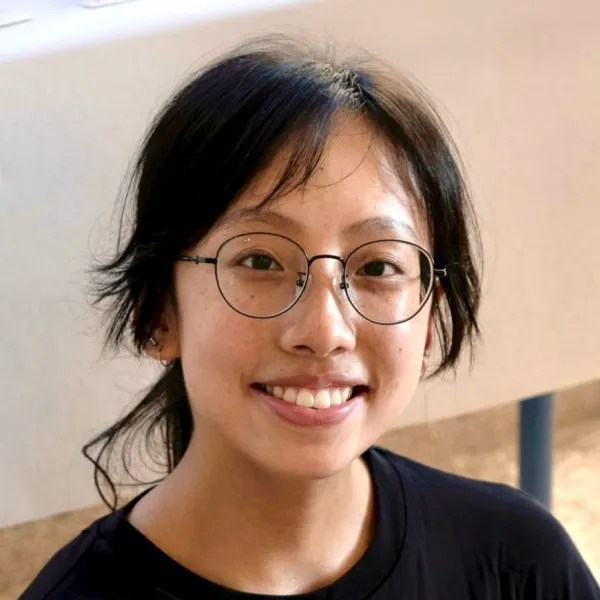
Xin Wen is a Chinese-American artist and designer with a background in environmental psychology, spatial experience design, and design strategy. Her practice explores how physical environments and intangible atmospheres influence human behaviour. As part of the artist duo XJ, she creates media-expansive works that confront the material and digital structures of contemporary life.
About Design for Good
Design for Good is a charity that mobilizes a global alliance to design lasting, measurable impact for the United Nations Sustainable Development Goals (UN SDGs) at a scale only achievable through worldwide collaboration. Their Alliance members comprise some of the world’s largest organizations, including DBS, d-school Afrika, Lloyds Banking Group, Nedbank and the Royal College of Art. All members give up intellectual property rights of projects designed within the programme so that they can be shared open-source with anyone around the world. Since 2022, Design for Good has convened more than 2,000 designers across 30 countries to collaborate with NGOs, charities and affected communities.


