Marking the conclusion of the Design Policy Days at Paulskirche, World Design Capital Frankfurt RheinMain 2026 presented recommendations for the region’s Design Action Plan: to embed design permanently in politics, administration and urban development by 2030.
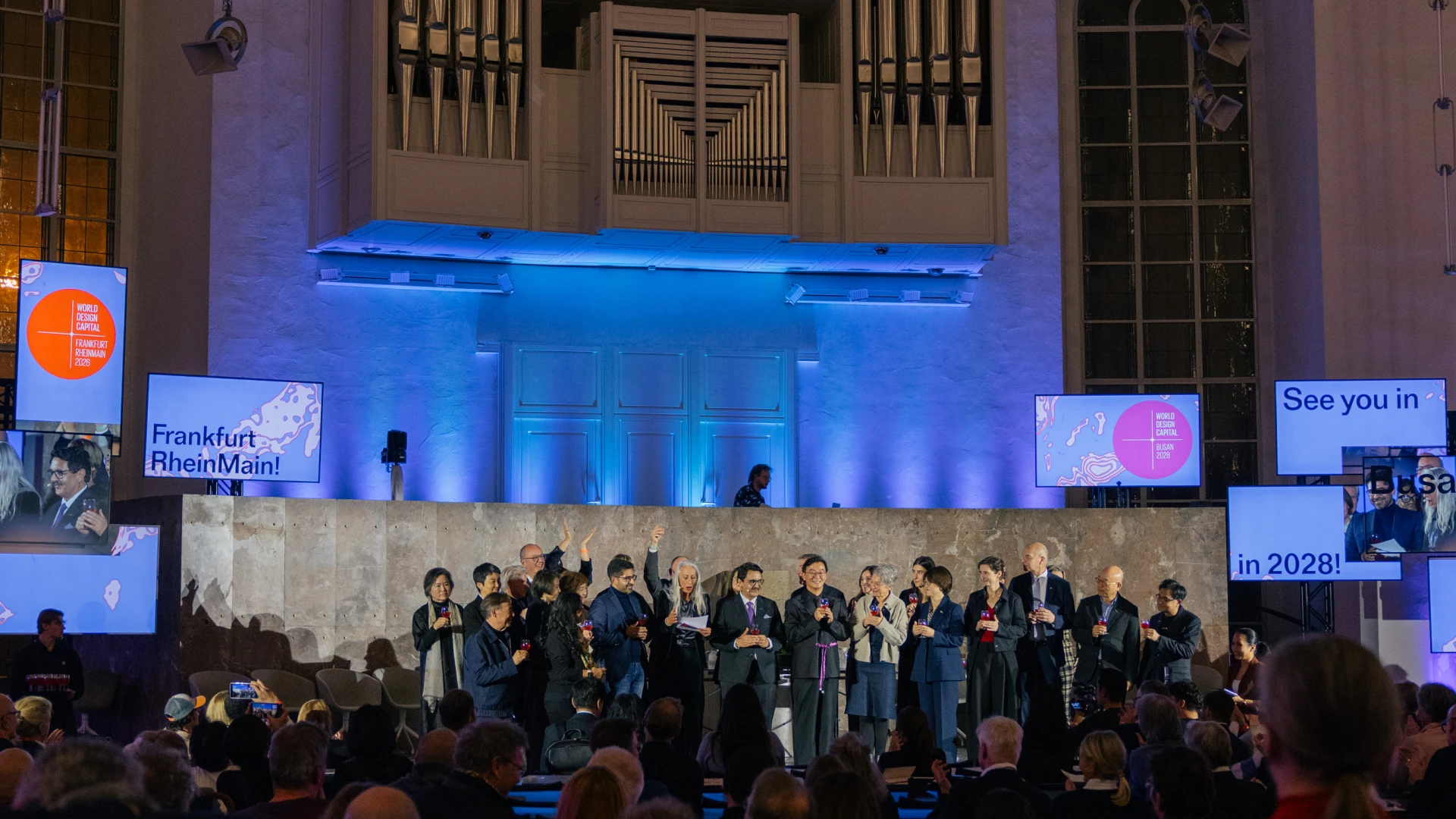
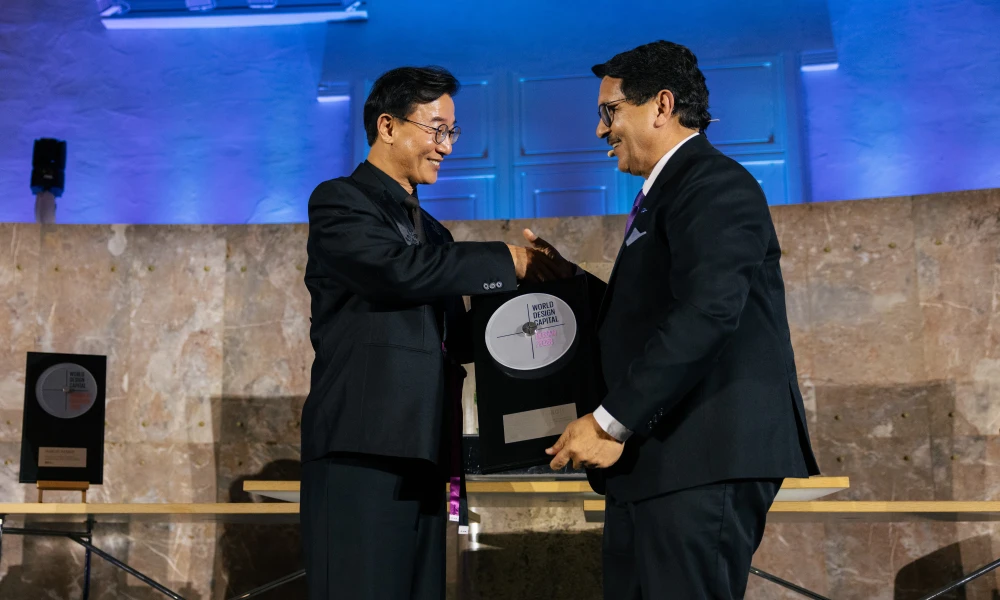
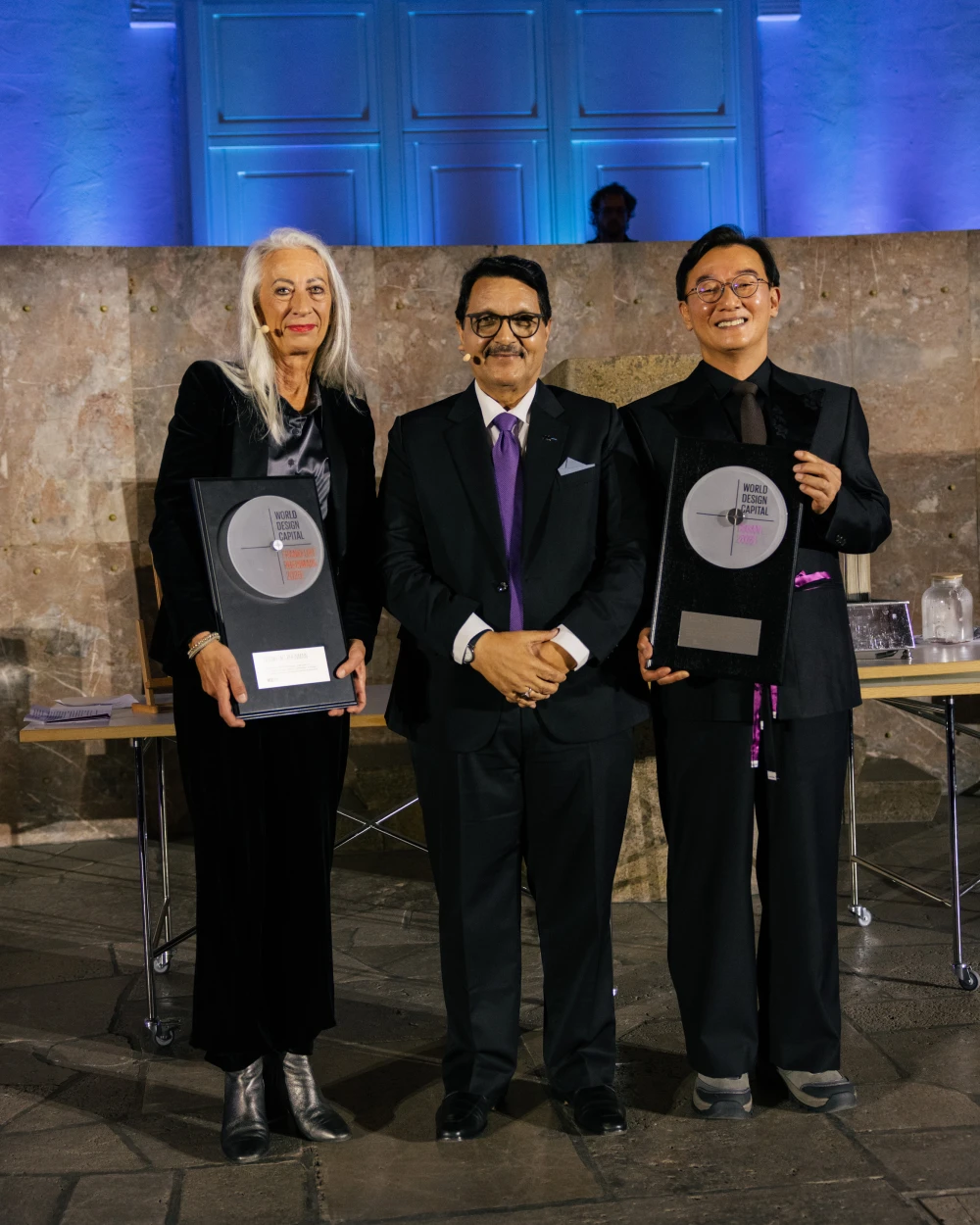
At the Design Policy Days in Wiesbaden, Offenbach and Frankfurt, more than 600 participants and some 100 international speakers discussed how design can drive social change and reshape politics, administration and urban development. Marking the conclusion of the Design Policy Days, held from 11 to 14 November 2026, WDC 2026 presented the key recommendations for the Design Action Plan Frankfurt RheinMain on Saturday evening at Frankfurt’s Paulskirche in front of 500 guests: by 2030, design is to be firmly embedded in the working practices of politics and public administration – to deliver citizen-centred and sustainable solutions. During the closing ceremony, the WDC title was also officially handed over to Busan (Republic of Korea) ahead of the city’s designation in 2028.
The policy paper brings together the key findings and recommendations from the WDC 2026 year and sets out how the networks, prototypes and partnerships that have emerged can have a lasting impact. Plans include a state-wide design centre, a mobile and digital experts team to advise local authorities, a biennial design week and design campus, a permanent physical design hub and interdisciplinary urban task forces.
Transformation researcher Prof. Dr. Maja Göpel praised WDC 2026 as a “fantastic flagship project for the whole region” and emphasized that “it shows how, through extensive public participation and many small individual projects, we can collectively find our way into shaping the future. I hope that WDC 2026 was not just a project, but the start of something big that will continue.”
The ceremonial handover of the WDC title to Busan also marks the continuation of the international design partnership with World Design Organization (WDO)®. The conclusion of this WDC year does not signify an end, but rather the transition from an international title year to a long-term design and transformation agenda for Frankfurt RheinMain.
Paulskirche as a symbolic venue
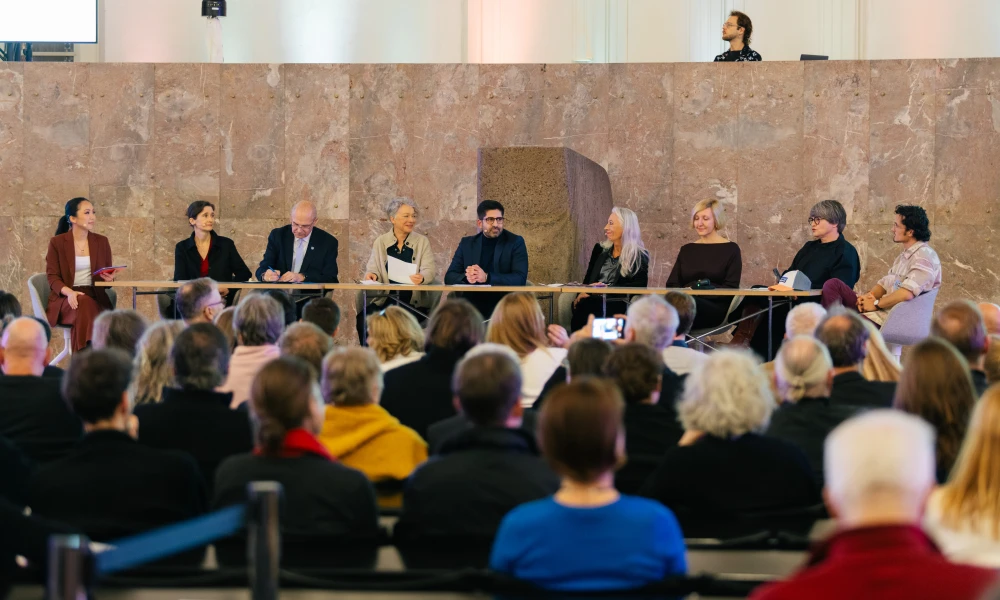
As the cradle of German democracy, the Paulskirche was the ideal symbolic venue for the closing event of World Design Capital 2026. Over the course of a year and under the guiding principle of Design for Democracy. Atmospheres for a better life, the region explored the question of how democracy and social cohesion can be shaped. At Paulskirche, the table became a metaphor for collaborative design: over the course of the evening, three tables were joined to form a long banquet table where people from the fields of design, culture, academia and politics came together.
The participants also collected apples as a symbol of their diverse contributions. Pressed into juice, they illustrated how something new emerges from diversity. Neo-soul singer NI-KA and her band provided musical accompaniment to the discussions and addressed the question Who is sitting at the table? through her music. Through the reflections, discussions and music the evening became an atmospheric collective conclusion to the WDC 2026 year.
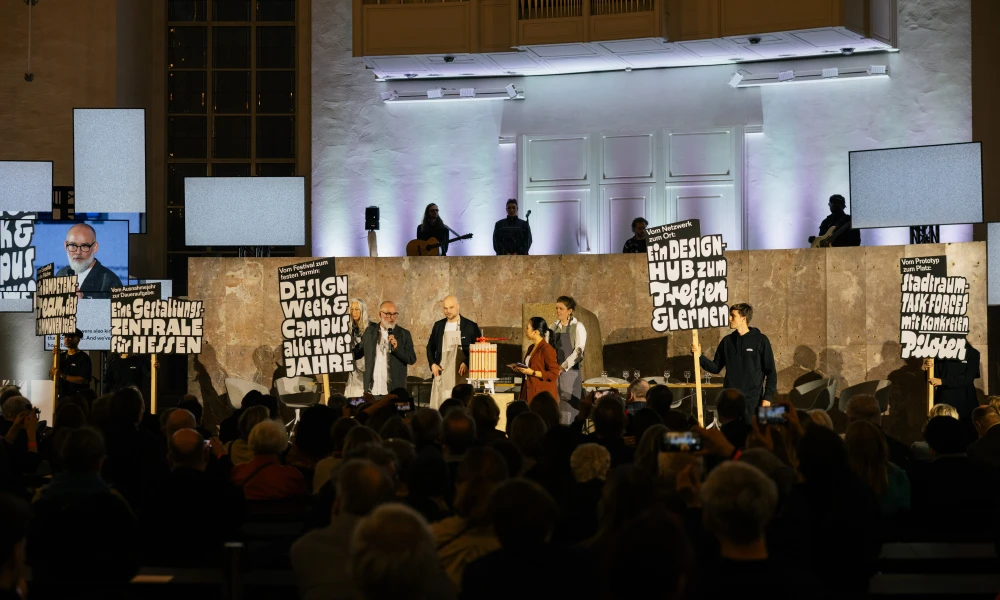
The Design Action Plan, which is now to be drawn up, is intended to consolidate these objectives into five specific recommendations, which will subsequently be incorporated into policy:
- From an exceptional year to an ongoing task: the establishment of a state-wide design centre for Hesse.
- From regional to state level: the establishment of a state-wide design centre for Hesse.
- From one-off festival to regular event: establishing a biennial design week and design campus.
- From network to physical space: a real-life design hub as a place for meeting and learning.
- From prototype to public space: interdisciplinary urban space task forces to implement specific pilot projects and schemes.
Carolina Romahn, CEO of World Design Capital Frankfurt RheinMain 2026, outlines the connection between the past year of events and the future. “WDC Frankfurt RheinMain 2026 was not a one-year festival, but a mandate for the future. This programme has demonstrated the enormous creative and innovative potential that lies within Frankfurt RheinMain. The task now is to ensure that the momentum generated by WDC will continue: ideas must become structures, prototypes must become lasting solutions, and the networks that have been established must become a collective force for the future. The Design Action Plan is the next logical step in this process – ensuring that the momentum of the WDC does not fade away, but instead becomes the foundation for sustainable development and a tangible driving force for the future of Frankfurt RheinMain.”
Design as the starting point for long-term transformation
Transformation researcher Prof. Dr. Maja Göpel also touched on this in her digital welcome address. She praised WDC 2026 as a “fantastic flagship project for the whole region” and highlighted the programme’s enormous scope. She sees it as more than just a successful project: the WDC could mark the start of a longer-term development in which many small, participatory initiatives combine to create significant impact. In her address, she emphasized that sustainable innovation is not driven by individual “beacons”, but by a “sea of lights” comprising many ideas, participants and concrete commitment. “Once you start caring, you start designing. Once you start sharing, you start multiplying.”
Frankfurt’s Head of Cultural Affairs, Dr. Ina Hartwig, gives a positive assessment of the WDC year whilst emphasizing the significance of handing over the title to Busan as a starting point for further international exchange: “The Design Policy Days provided a strong conclusion to the WDC 2026 year. With three major conferences in Wiesbaden, Offenbach and Frankfurt, and around 100 speakers taking part in round-table and panel discussions, we have once again raised the international of WDC Frankfurt RheinMain, placing the connection between design and democracy centre stage. The Design Assembly was the celebratory closing event of our WDC year and could not have taken place in a better venue than Frankfurt’s Paulskirche – a symbol of democracy and diversity of opinion. By handing over the title to Busan, we are passing on the vision of WDC Frankfurt RheinMain 2026 whilst also building a new bridge for internationalism, exchange and openness to the world.”
The Design Policy Days
During the Design Policy Days in Wiesbaden, Offenbach and Frankfurt, more than 600 participants and some 100 international speakers worked on the key questions of how successful design can lead to structural social transformation. The discussions and findings are reflected in the position paper:
In Offenbach, on Thursday 12 November, the University of Art and Design hosted a session on the theme When Form Becomes Attitude: the focus was on concepts such as attitude and responsibility, as well as the methodological limits of design in a crisis-ridden world.
When Design Gets Political – to conclude the preceding conferences, on Friday 13 November, at Goethe University Frankfurt am Main, the focus was on digital sovereignty, platform economies and fundamental state reforms. Alongside groundbreaking debates – featuring, for example, Nicole Deitelhoff and Friedrich von Borries – the conference also honoured the winners of the Hessian State Prize for Universal Design, including three projects from the WDC Campus.
At the end of the three-day conferences, at Goethe University Frankfurt, Prof. Dr Nicole Deitelhoff, Executive Board Member of the PRIF (Leibniz Institute for Peace and Conflict Research) and Professor of International Relations and Theories of Global Order at Goethe University Frankfurt, summarized: “Over three days, the Design Policy Days, as a think tank for political design and service design, have demonstrated how design, politics and participation can be integrated: in public administration, in urban spaces and in the processes through which we debate and make decisions together. This ties in directly with our concept study on the House of Democracy. In that study, we argue that democracy should not merely be taught, but made tangible and experienced in a practical and sensory way. For it is democracy, as people experience it in their everyday lives, that is losing support above all. It is therefore fitting that the insights from the Design Policy Days have been incorporated into the Design Assembly at Paulskirche: they belong in a place where democracy is not merely commemorated, but negotiated.”
Handover of the World Design Capital title to Busan
With the handover of the WDC title to Busan, the WDC year in Frankfurt RheinMain comes to an end – but the network that has been established remains. The World Design Capital designation has brought together people, institutions and partners from the region with stakeholders from all over the world, and has raised Frankfurt RheinMain’s international profile as a place where design, democracy and social innovation converge. This international networking is one of the key achievements of the WDC year and is set to continue to have an impact beyond the title itself. Busan is now a new World Design Capital partner – and, at the same time, a city with which a connection has already been forged. The handover of the title is therefore not only a passing of the WDC baton, but also the start of further collaboration, exchange and joint projects.
Deputy Minister-President and Minister for Economic Affairs, Kaweh Mansoori, emphasized the economic significance of the design and creative industries for Hesse’s future: “A successful year as a title holder does not end with the final event. What matters is what comes of it. The Design Policy Days and the Design Assembly demonstrate the economic potential of our creative industries. Design brings people, ideas and sectors together, creates new business models and strengthens the competitiveness of our companies. In this regard, our collaboration with Busan also opens up new international prospects for us. With the Design Action Plan, we aim to embed these initiatives permanently in Hesse. Our mission is to ensure that good ideas become concrete projects and that new connections develop into long-term partnerships.”
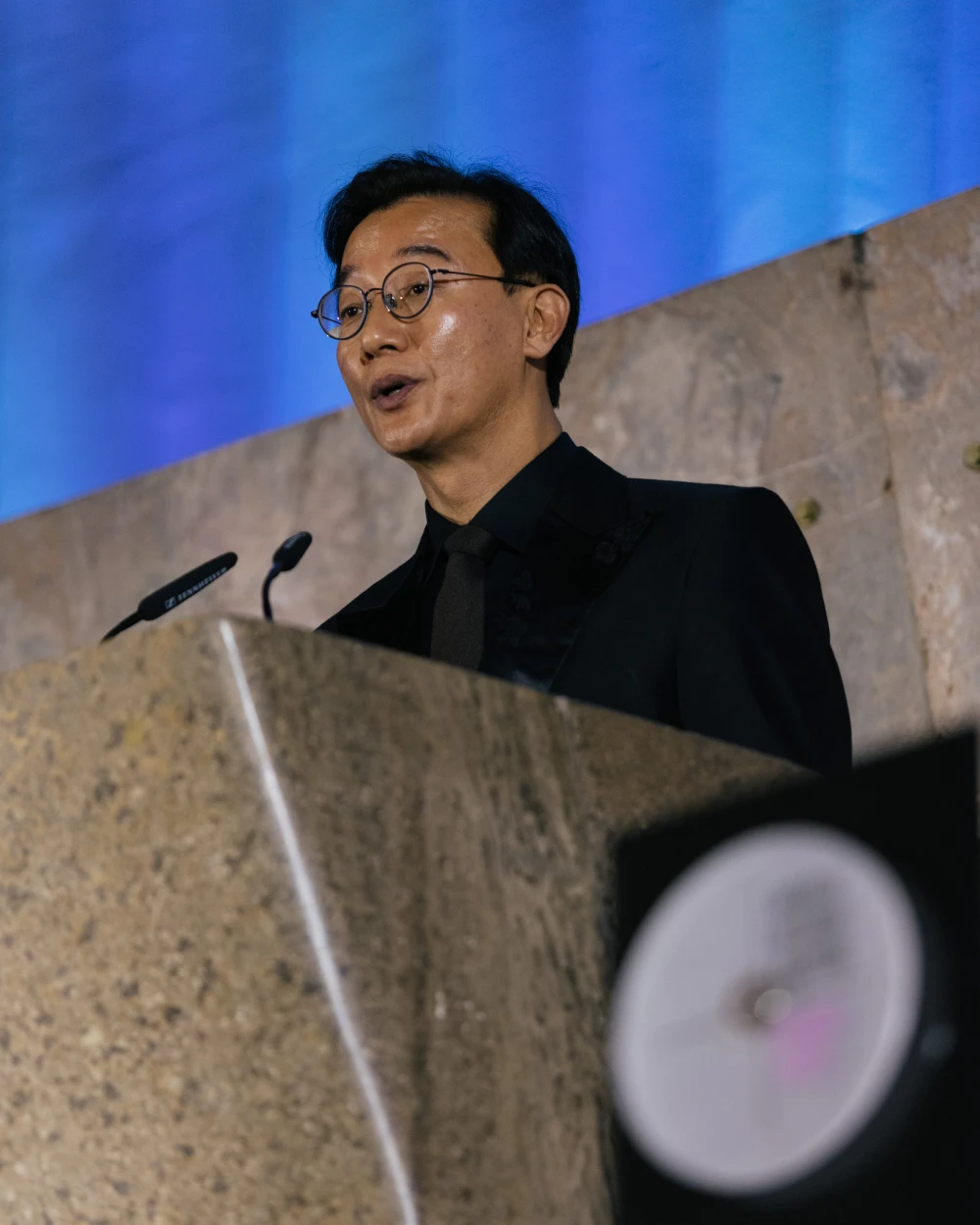
The Convocation Ceremony provided the festive finale at Paulskirche: before a packed hall, the title of World Design Capital was officially handed over to the South Korean metropolis of Busan. WDO President Pradyumna Vyas gave a positive assessment: “The World Design Capital Frankfurt RheinMain 2026 has demonstrated what is possible when design takes centre stage in democracy and everyday life. The programme has brought together local authorities, civil society, universities and businesses, and has opened up new ways for people to help shape their living environments. The task now is to build on this momentum and inspire cities worldwide to harness the potential of design.”
With the theme of Inclusive City, Engaged Design, Busan will build on the expanded concept of design established by World Design Capital Frankfurt RheinMain 2026 and focuses on the question of how design can promote social participation and help shape the urban future collectively. The WDC title now moves on to Busan – the WDC’s invitation to shape the future together also marks the start of the next chapter.